← back
Must-ReadDelhi High Court
Delhi High Court Keeps Forgery-Tainted One-Third Share Out of SARFAESI E-Auction: Writ Maintainable Against Private ARC Where Fraud in Creation of Security Interest Is Prima Facie Shown
Court / Authority
Delhi High Court
Update / Judgement Date
12 Oct 2026
Date of Publication
16 Oct 2026
Case No.
W.P.(C) 7203/2026
Source
WCP News Bulletin
Author
Dipanshi Bansal — WCP Legal Desk
Reading Time
11 min read
BankingCivil Law
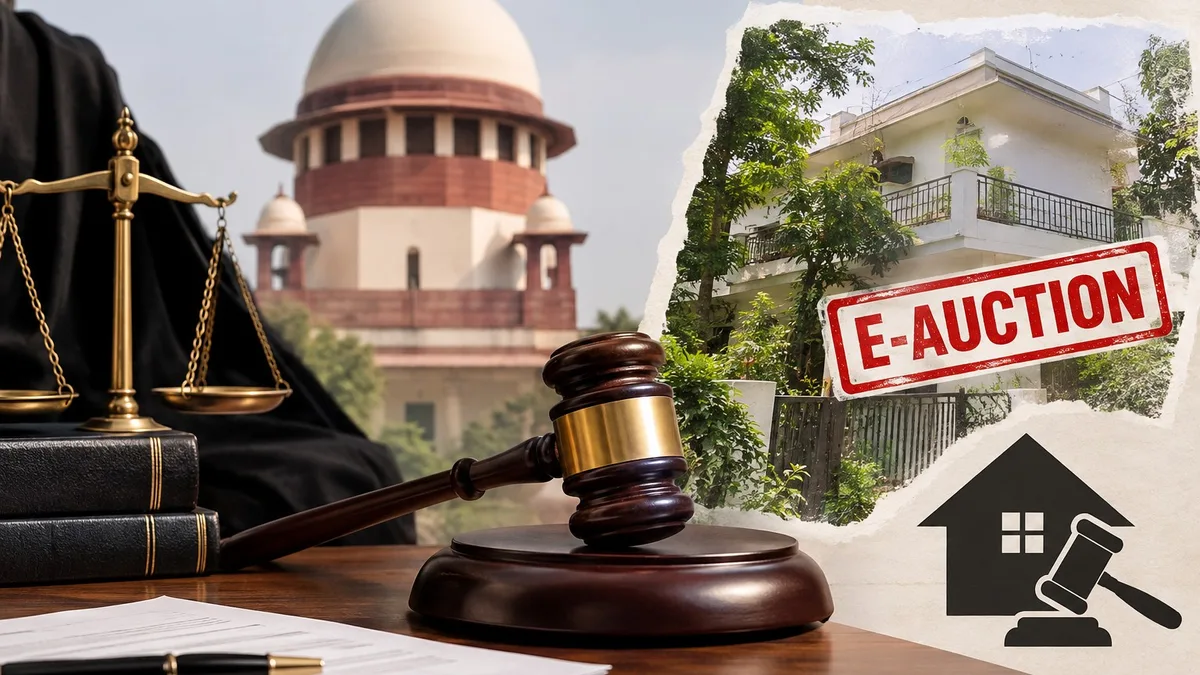
- The petitioner, a one-third co-owner of a Gulmohar Park property, alleged that her signatures on ICICI Bank loans of about Rs.14.96 crores were forged, supported by forensic and Economic Offences Wing material; Prudent ARC, the assignee, issued an e-Auction Notice under the SARFAESI Act. The issue was whether a writ lay against a private asset reconstruction company (ARC) despite the Section 17 remedy and alleged delay. Accepting that a private ARC is not a State instrumentality (Para 38), the Court held that where fraud in creating the very security interest is prima facie shown, Section 34 does not oust the civil court and the alternative remedy is no absolute bar to Articles 226 and 227 (Paras 44–52), and it rejected the pleas of acquiescence and suppression (Paras 59–64). The petition was allowed and the one-third share excluded from the auction (Paras 66, 69).
Key Proposition: Where fraud and forgery in the creation of the very security interest are prima facie made out by forensic and investigative material, the alternative remedy under Section 17 of the SARFAESI Act is not an absolute bar to a writ under Articles 226 and 227 against a private ARC, and the affected co-owner’s undivided share cannot be auctioned until the genuineness of the loan documents is adjudicated by a competent court.
- SARFAESI Act, 2002 – Sections 13(4), 17, 34 – Writ against private ARC – Alternative remedy before DRT – Allegation of forged loan and mortgage documents supported by FSL and EOW material – Whether writ maintainable – Held, yes, on the peculiar facts; fraud falls outside the DRT remedy and Section 34 bar. (Paras 38–52, 57)
- Constitution of India – Articles 226, 227 – Whirlpool exceptions – Alternative remedy not a bar where proceedings are wholly without jurisdiction or fraud goes to the root of the security interest – Held, applicable. (Paras 41, 52–56)
- Delay, laches and acquiescence – Powers of Attorney of 2005–2008 versus loans of 2015–2020 – Held, plea fails; petitioner learnt of the loans on 29.05.2021 and acted promptly. (Paras 58–62)
- Auction of undivided share – Article 300A – Held, petitioner’s one-third share cannot be sold until validity of loan documents is adjudicated; two-third share unaffected. (Paras 66–69)
Background / Synopsis :
- Petitioner (a senior citizen, earlier of Mumbai and now abroad) holds a one-third undivided share, and respondent No. 3 (her sister-in-law) two-thirds, in Plot B-50, Gulmohar Park, New Delhi (499 sq. yards); respondent No. 4 is respondent No. 3’s husband; respondent No. 1 is Prudent ARC (assignee) and respondent No. 2 is ICICI Bank (assignor). (Paras 2–4)
- Respondents 3 and 4 allegedly obtained five loan facilities from ICICI Bank (principal stated at Rs.14.96 crores) by mortgaging the property, with the petitioner shown as co-applicant; she denies applying for or receiving the loans and says her signatures were forged. She learnt of the loans in May 2021, wrote to the Bank on 31.05.2021, obtained documents on 19.06.2021 and a private forensic report dated 25.06.2021. (Paras 5–9)
- 31.08.2021 complaint to EOW; FIR No. 17/2022 (28.01.2022) registered against respondents 3 and 4 and unknown bank officials under Sections 406, 420, 468, 471 read with 120-B of the Indian Penal Code, 1860. EOW status report of 13.12.2024 recorded that FSL found the petitioner’s signatures forged. (Paras 10, 15, 43)
- 18.06.2022: Demand notice under Section 13(2) of the SARFAESI Act. Petitioner filed CS SCJ No. 779/2022; the Order VII Rule 11 CPC application of ICICI Bank was allowed on 09.06.2023 on the ground that the SARFAESI Act barred the suit; her appeal (RCA DJ No. 7/2025) is pending before the District Judge, Saket. Loans were assigned to Prudent ARC by Assignment Deed of 25.09.2024. (Paras 11–14, 48)
- 25.04.2026: Impugned e-Auction Notice for sale on 29.05.2026. The petitioner sought quashing, restraint on third-party rights, stay pending her appeal or, alternatively, deposit of one-third of the property’s fair value. (Paras 1, 17)
Issues For Consideration :
- Whether a writ petition is maintainable against a private ARC.
- Whether the writ petition is liable to be rejected at the threshold because an alternate remedy exists.
- Whether the petition is barred by delay, laches and acquiescence.
- Whether the petition suffers from suppression of facts, a defective Special Power of Attorney, or seeks the same relief as the civil suit. (Paras 35, 63–68)
Submissions Of Parties :
- Petitioner:
- Respondents cannot frustrate subject matter sub judice before the Saket courts; the foundation of the auction – the loans and mortgage – is under challenge on grounds of fraud and forgery; the assignment cannot cure defects in the underlying security. (Paras 18–21)
- She was never a borrower or guarantor; auction would cause irreparable prejudice and violate Articles 14 and 21; Articles 226 and 227 should be invoked notwithstanding an alternate remedy. (Paras 22–23)
- Relying on Mardia Chemicals Ltd. v. Union of India, (2004) 4 SCC 311, fraud by a secured creditor permits civil-court recourse; fraud cannot be adjudicated by the DRT; she was never served in the DRT proceedings and no affidavit of service was filed despite the order of 18.04.2024, suggesting collusion. (Paras 31–33, 37)
Respondent No. 1 (Prudent ARC):
- Petition not maintainable because of the efficacious remedy under Section 17 of the SARFAESI Act and the Section 34 bar; reliance on Bhadra International India Pvt. Ltd. v. Punjab National Bank (W.P.(C) 7939/2025) and Celir LLP v. Bafna Motors (Mumbai) Pvt. Ltd., (2024) 2 SCC 1. (Paras 24–25)
- Fraud is for the civil court, which the petitioner has already approached (Rushali Khera v. State (NCT of Delhi), 2023 SCC OnLine Del 1320); a private ARC is not a State instrumentality (Girish Bansal v. Yashpal Singla, 2023 SCC OnLine Del 4981); forum shopping; defective Special Power of Attorney and suppression of facts. (Paras 26–28)
Respondent Nos. 3 and 4:
- Adopt the above grounds and add that the petition is barred by delay, laches and acquiescence because the petitioner issued Powers of Attorney authorising loans against the property, admitted this in her letter dated 29.06.2021, and took no action since 2005. (Paras 29–30)
Court's Observations & Analysis :
- Re: Issue (i) & (ii): Maintainability against a private ARC and the alternative remedy
- It was undisputed that a private ARC does not become an Article 12 instrumentality merely by exercising SARFAESI rights; the question was whether writ jurisdiction could be invoked on the peculiar facts. (Para 38)
- The assignee steps into the assignor’s shoes and ordinarily cannot have greater rights; the petitioner challenged the very foundation of the loan and security interest, alleging fraud and collusion by respondents 2 to 4. (Para 39)
- Satyawati Tondon (as applied in Celir LLP) carves only a narrow exception to the alternative-remedy rule, and Whirlpool recognises that the alternative remedy is no bar where fundamental rights are violated, natural justice is breached or proceedings are wholly without jurisdiction. (Paras 40–41)
- Without examining the reliability of the FSL and EOW reports, the Court found they prima facie show fraud by employees of respondent 2 and respondents 3 and 4; if fraud is later proved, the action of respondent 1 would be without jurisdiction. (Paras 42–44)
- Mardia Chemicals (paras 50–51), explained in Tajunissa v. Vishal Sharma, (2022) 2 HCC (Del) 154, allows the civil court a limited jurisdiction where the secured creditor’s action is alleged to be fraudulent; the remedy for fraud does not lie before the DRT under Section 17 and Section 34 does not exclude the civil court. (Paras 45–47)
- The pending appeal against rejection of the plaint did not alter the position: no merits adjudication occurred and, relying on IEEE Mumbai Section Welfare Assn. v. Global IEEE Institute for Engineers, 2025 SCC OnLine SC 1756, an interim injunction could not have been sought or granted in that appeal. Gurdeep Singh v. Punjab & Sind Bank, 2015 SCC OnLine Del 6724 supported restraining recovery pending a suit. (Paras 48–51)
- Allowing the auction would create third-party rights and multiplicity of litigation if the documents are later held forged; the respondents’ authorities concern the general rule that borrowers must use SARFAESI remedies. (Paras 54–56)
- Held: The writ petition is maintainable. (Paras 52, 57)
Re: Issue (iii): Delay, laches and acquiescence
- Acquiescence presumes the loans were raised under the 2005–2008 Powers of Attorney, which is the very point in dispute; the petitioner’s case is that the facilities date from 2015 to 2020 and that she learnt of them only on 29.05.2021. Even under valid GPAs, respondents had no right to forge her signature. (Para 59)
- The letter of 29.06.2021 says earlier Powers of Attorney stood revoked on family separation and asks respondent No. 4 to disclose action taken; it does not admit that she authorised the loans or mortgage. (Para 60)
- Her knowledge and acquiescence are questions of fact for the competent forum; her prompt steps, including the civil suit, show she did not sleep over her rights. (Paras 61–62)
- Held: The petition is not barred by delay, laches or acquiescence. (Para 62)
Re: Issue (iv): Suppression, same relief and defective power of attorney
- DRT orders of 18.04.2024 and 21.01.2026 show nobody appeared for the petitioner, so she was prima facie unaware of the DRT proceedings and suppression is not made out. (Paras 63–64)
- The civil suit challenges the loan documents and mortgage whereas the writ seeks stay of the e-auction for infraction of her rights, so the same relief is not sought. (Para 65)
- The plea of a defective General Power of Attorney dated 20.04.2023 is hyper-technical since paragraphs 5 to 7 authorise the petitioner’s son to file the petition. (Para 68)
- Held: The petitioner’s one-third share cannot be sold in e-auction till the loan documents’ veracity is adjudicated; Article 300A protects against deprivation of property save by authority of law. (Paras 66–67)
Notable Observations:
- “Thus, the existence of an efficacious alternative remedy is not an absolute bar to the exercise of jurisdiction under Articles 226 and 227 particularly where the proceedings impugned before the Court are alleged to be founded upon fraud and forgery and the very existence of the underlying security interest is under challenge.” (Para 52)
- “The property of the petitioner cannot be taken away in the manner as followed by the respondents.” (Para 55)
Decision & Directions :
- Writ petition allowed. The petitioner’s undivided one-third share in Property No. B-50, Gulmohar Park, Zone F-3, Masjid Moth, New Delhi – 110049 shall be excluded from the auction. (Para 69)
- No restriction is imposed on the two-third undivided share of the property. (Para 69)
- Costs and compliance timelines: Not stated in judgment. Separate Opinions: None.
Legal Provisions Discussed & Precedents Cited :
- Securitisation and Reconstruction of Financial Assets and Enforcement of Security Interest Act, 2002 (SARFAESI Act) – Section 13(2), 13(4) – Demand notice and enforcement measures (impugned notice treated as under Section 13(4)).
- SARFAESI Act – Section 17 – Remedy before the Debts Recovery Tribunal (DRT); Section 34 – Bar on civil court jurisdiction, subject to the Mardia Chemicals fraud exception.
- Constitution of India – Articles 226, 227 (writ and supervisory jurisdiction), 12 (State instrumentality), 14, 21 (argued), 300A (deprivation of property).
- Code of Civil Procedure, 1908 – Order VII Rule 11 (rejection of plaint; effect on interim relief in appeal).
- Indian Penal Code, 1860 – Sections 406, 420, 468, 471, 120-B (FIR No. 17/2022) ↔ Bharatiya Nyaya Sanhita, 2023 – Sections 316(2), 318(4), 336(3), 340(2), 61(2) respectively.
- Doctrines: Alternative remedy as a rule of discretion with Whirlpool exceptions; assignee steps into the assignor’s shoes; fraud unravels transactions; avoiding multiplicity of proceedings and third-party equities.
- Mardia Chemicals Ltd. v. Union of India, (2004) 4 SCC 311 – Followed.
- Tajunissa v. Vishal Sharma, (2022) 2 HCC (Del) 154 – Relied on.
- Whirlpool Corpn. v. Registrar of Trade Marks, (1998) 8 SCC 1 – Relied on (three exceptions to the alternative-remedy rule).
- United Bank of India v. Satyawati Tondon, (2010) 8 SCC 110 – Referred to (narrow exceptions; applied in Celir LLP).
- Celir LLP v. Bafna Motors (Mumbai) Pvt. Ltd., (2024) 2 SCC 1 – Distinguished (respondents’ authorities concern the general rule; this case raises fraud in the creation of the security interest).
- IEEE Mumbai Section Welfare Assn. v. Global IEEE Institute for Engineers, 2025 SCC OnLine SC 1756 – Relied on (no interim injunction in appeal against rejection of plaint).
- Gurdeep Singh v. Punjab & Sind Bank, 2015 SCC OnLine Del 6724 – Relied on (recovery proceedings restrained pending suit).
Full Judgement / Attachment
Full Judgement
Frequently asked questions about Delhi High Court
- Where does the Delhi High Court sit and which areas does it cover?
- The Delhi High Court sits in New Delhi. It has jurisdiction over the National Capital Territory of Delhi. It was established on 31 October 1966 and is a leading forum for commercial, intellectual property, tax and arbitration matters.
- How do I check Delhi High Court case status and judgements?
- The official website, delhihighcourt.nic.in, provides case status, cause lists, e-filing and judgements searchable by party, judge or date. Orders are also mirrored on the eCourts Judgments portal (judgments.ecourts.gov.in).
- What are the Delhi High Court's Commercial and IP Divisions?
- Delhi High Court has original civil jurisdiction, so high-value suits in Delhi are filed directly before it. Its Commercial Division hears commercial disputes, and its Intellectual Property Division, set up in 2021 after the IPAB was abolished, hears patent, trademark and copyright cases. It is also a major forum for tax appeals from the ITAT Delhi Benches and for arbitration petitions.
- What is an LPA in the Delhi High Court?
- A Letters Patent Appeal (LPA) under Clause 10 of the Letters Patent lets a party challenge certain single-judge orders, typically in writ matters, before a Division Bench. In commercial cases, appeals lie under Section 13 of the Commercial Courts Act instead. Final judgements can be challenged by a Special Leave Petition under Article 136, ordinarily within 90 days.
- How can White Collar Professional help with a Delhi High Court matter?
- Post your requirement on White Collar Professional to receive proposals from verified Advocates, Chartered Accountants and Company Secretaries, compare them, and pay securely through the platform. This page also tracks the latest Delhi High Court judgements and legal updates as they are reported.