ED Secures Court Cognizance in Videocon Mozambique Oil Deal Money Laundering Case
Court / Authority
Supreme Court of India
Update / Judgement Date
15 Jul 2026
Source
WCP News Bulletin
Author
Manas Yadav — WCP Legal Desk
Reading Time
2 min read
View Count
1

The Directorate of Enforcement (ED), through its HIU-1 Office, has moved the Special Court at Rouse Avenue, New Delhi, in the Videocon Mozambique Oil Deal case against Venugopal Dhoot and 12 other accused persons and entities under the Prevention of Money Laundering Act, 2002. The court has taken cognizance of the offence on 10 February 2026 and issued notices to all accused.
The case stems from an FIR registered by the Central Bureau of Investigation in June 2020, alleging criminal conspiracy, cheating, and corruption involving diversion of massive foreign currency loans obtained by the Videocon Group. According to the ED, loan facilities sanctioned by a consortium of Indian banks and foreign lenders for overseas oil and gas development were systematically siphoned off under the promoters’ direction.
Funds were routed through multiple overseas group companies, layered via circular transactions, and eventually brought back into India disguised as export advances, investments, and loan repayments. Investigators found that out of USD 4.54 billion in facilities, around USD 2.02 billion was misused for unrelated businesses and asset creation.
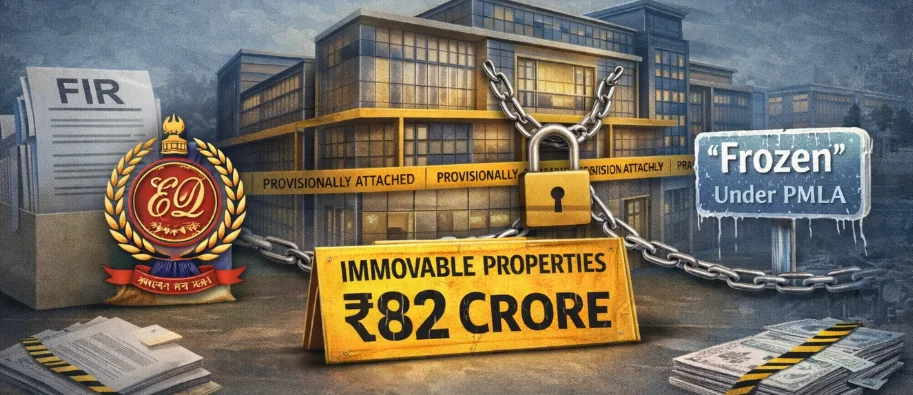
Several Videocon accounts later turned NPAs, with bank claims exceeding ₹61,000 crore. The ED has already attached assets worth over ₹56 crore and filed a prosecution complaint involving proceeds of crime of ₹1,136.49 crore.
Full Judgement / Attachment
Full Judgement
Frequently asked questions about Supreme Court of India
- What is the role of the Supreme Court of India?
- The Supreme Court, established on 28 January 1950, is the highest court of appeal in India. Under Article 141 of the Constitution, the law it declares is binding on all courts in India. It also hears writ petitions for enforcement of fundamental rights under Article 32.
- How can I check Supreme Court case status or download a judgement?
- Case status, cause lists, daily orders and judgements are published on the official website, sci.gov.in. Reported judgements are also available free through the Digital SCR (Supreme Court Reports) on the same website.
- What is a Special Leave Petition (SLP) and what is the time limit?
- An SLP under Article 136 asks the Supreme Court for permission to appeal against a judgement or order of any court or tribunal in India. Against a High Court judgement it is ordinarily filed within 90 days. Leave is discretionary, and most SLPs are decided at the admission stage.
- Who can file a case in the Supreme Court?
- Only an Advocate-on-Record, a lawyer who has passed the Supreme Court's AOR examination, can file pleadings in the Supreme Court. A party may appear in person with the Court's permission, but most litigants engage an Advocate-on-Record along with arguing counsel.
- How can White Collar Professional help with a Supreme Court matter?
- Post your requirement on White Collar Professional to receive proposals from verified Advocates, Chartered Accountants and Company Secretaries, compare them, and pay securely through the platform. This page also tracks the latest Supreme Court judgements and legal updates as they are reported.