IBBI Appellate Authority Disposes RTI Appeal, Urges CPIO to Meet Statutory Reply Deadlines
Court / Authority
Insolvency & Bankruptcy Board
Update / Judgement Date
27 Nov 2026
Source
WCP News Bulletin
Author
Dipanshi Bansal — WCP Legal Desk
Reading Time
2 min read
View Count
1

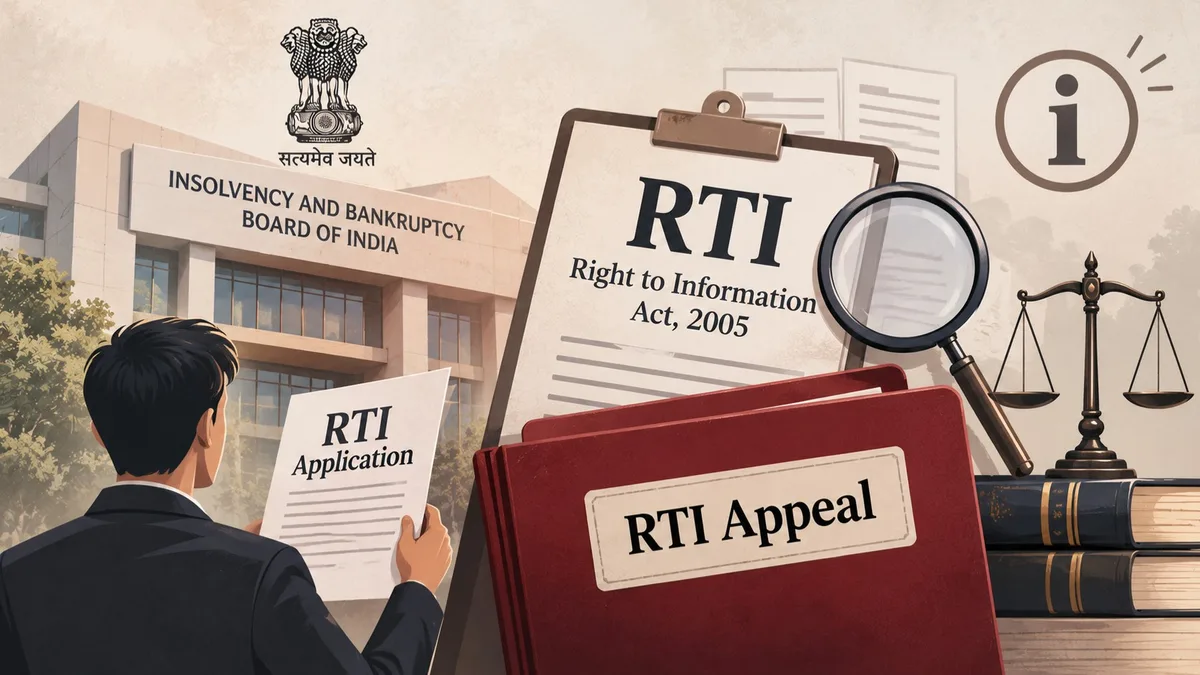
IBBI's First Appellate Authority disposed of an RTI appeal on 27 November 2026 against the CPIO's failure to reply on time. The CPIO answered 38 days after the deadline, on 23 November 2026. The Authority made no change to the reply but urged the CPIO to dispose of RTI applications within the prescribed time.
Key Highlights :
- The RTI application was filed on 16 September 2026, and the deadline to dispose of it expired on 16 October 2026.
- The appeal is dated 23 October 2026. It was decided within 45 days of receipt, which the order attributes to administrative workload.
- The CPIO replied on 23 November 2026, after the appeal was filed and beyond the statutory timeline.
- The appeal was not allowed any further relief because a reply had been furnished.
- The application sought records on a complaint against an insolvency professional in the process of Radhey Sham Tandon Manufacturing Private Limited. The order does not state what the reply contained.
Background :
- The appeal was filed under section 19 of the Right to Information Act, 2005 (RTI Act) for non-reply within time, not against the content of an answer.
- General context: section 7(1) of the RTI Act sets 30 days for a reply.
What Has Changed :
Issue: CPIO replied after the deadline. Finding: The delay was noted, and the CPIO, as an officer of a public authority like IBBI, should be sensitive to timelines (para 1). Outcome: No interference since the reply was given. Appeal disposed of.
References :
Right to Information Act, 2005: sections 2(f), 2(j), 3 and 19; general context: section 7(1).
Source & Attribution :
- Primary source: IBBI First Appellate Authority order of 27 November 2026 in RTI Appeal Registration No. ISBBI/A/E/26/00059 (Shiv Anant Shankar). Link: Not stated in source (document supplied as PDF).
- 3rd Party Credit: Not applicable.
Disclaimer: This summary is an editorial aid prepared from publicly available information. It is not legal, tax or investment advice. Refer to the original notification, circular, order or report before acting.
Full Judgement / Attachment
Full Judgement
Frequently asked questions about Insolvency & Bankruptcy Board
- What is the IBBI?
- The Insolvency and Bankruptcy Board of India, set up on 1 October 2016 under the Insolvency and Bankruptcy Code, 2016 (IBC), regulates insolvency professionals, insolvency professional agencies, information utilities and registered valuers. It also frames the regulations for insolvency processes.
- When can insolvency be started against a company?
- A financial creditor, an operational creditor or the company itself can apply to the National Company Law Tribunal (NCLT) once there is a default of at least ₹1 crore. On admission, a moratorium starts and an interim resolution professional takes charge.
- How long does the corporate insolvency process take?
- The Code provides 180 days for the corporate insolvency resolution process (CIRP), extendable up to an overall limit of 330 days, including time spent in litigation. In practice, many cases take longer. The IBC (Amendment) Act, 2026, largely in force from 26 May 2026, requires the NCLT to decide admission applications within 14 days and to record reasons for any delay.
- Where can an NCLT insolvency order be appealed?
- An appeal lies to the National Company Law Appellate Tribunal (NCLAT) within 30 days, extendable by up to 15 days for sufficient cause. A further appeal lies to the Supreme Court on a question of law.
- How can White Collar Professional help with a insolvency matter?
- Post your requirement on White Collar Professional to receive proposals from verified Insolvency Professionals, Chartered Accountants and Advocates, compare them, and pay securely through the platform. This page also tracks the latest insolvency IBC and IBBI updates as they are reported.