ITAT Mumbai Condoned Delay and Restored Quantum and Penalty Appeals in Kishor Patil Case
Court / Authority
Income Tax Tribunal
Update / Judgement Date
25 Jul 2026
Source
WCP News Bulletin
Author
Manas Yadav — WCP Legal Desk
Reading Time
2 min read
View Count
5
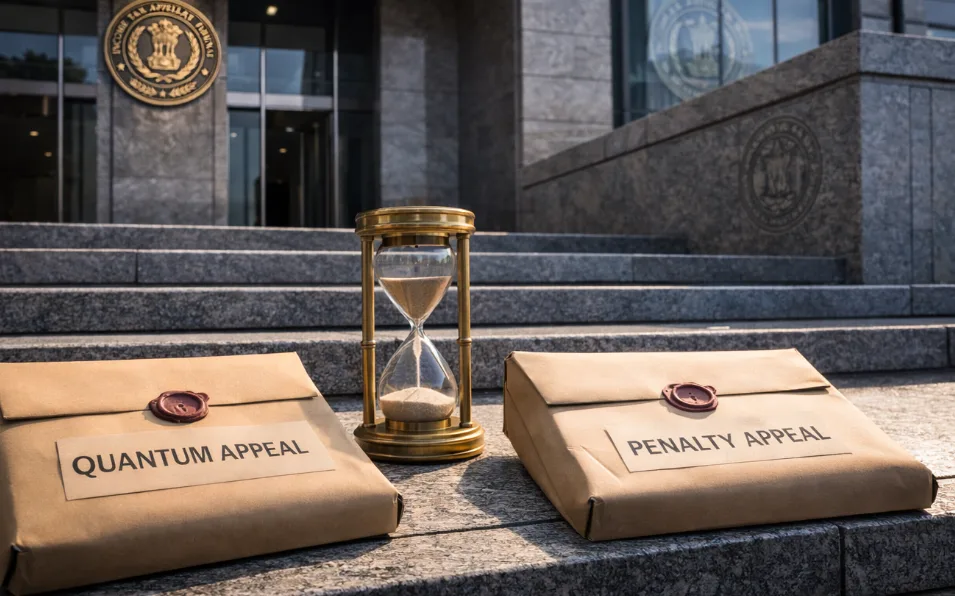
The “E” Bench of the Income Tax Appellate Tribunal, Mumbai, in the case of Kishor Changya Patil (AY 2019–20), set aside the ex parte dismissal of both quantum and penalty appeals and restored them for fresh adjudication on merits.
CIT(A) Dismissed Appeals Solely on Limitation Grounds
The assessee had filed two appeals arising from reassessment proceedings under sections 147 and 144 of the Income-tax Act. One appeal related to additions made in the assessment order, while the other challenged penalty levied under section 271AAC(1). The Commissioner of Income Tax (Appeals), NFAC, dismissed both appeals in limine on the ground of delay in filing, without examining the substantive issues. The orders contained no discussion on the merits of the additions or penalty. Before the Tribunal, the assessee contended that the delay occurred due to bona fide circumstances beyond his control and was neither deliberate nor mala fide.
Tribunal Applies Liberal Approach to Condonation
The ITAT observed that settled law requires a liberal and justice-oriented approach while considering delay condonation applications. It noted that there was no indication of deliberate delay or any undue advantage gained by the assessee. Holding that substantial justice should prevail over technical considerations, the Tribunal condoned the delay. The impugned orders were set aside, and both matters were restored to the CIT(A) for fresh adjudication on merits after granting reasonable opportunity of hearing.
Both appeals were allowed for statistical purposes.
Full Judgement / Attachment
Full Judgement
Frequently asked questions about Income Tax Tribunal
- What is the Income Tax Appellate Tribunal (ITAT)?
- The ITAT, set up in 1941, is the second appellate authority in direct tax matters and the final fact-finding body. It hears appeals against orders of the Commissioner (Appeals) and certain other authorities, through benches across India.
- What is the time limit to file an appeal before the ITAT?
- An appeal must be filed within two months from the end of the month in which the order is communicated. This rule has applied since 1 October 2024 and continues under the Income-tax Act, 2025. The Tribunal can condone delay for sufficient cause.
- Can the ITAT stay a tax demand?
- Yes. The Tribunal can stay recovery of a disputed demand while an appeal is pending, usually on deposit of a part of the demand or furnishing security. Stays are granted for a limited period, and the appeal is expected to be decided within it.
- Where does an appeal go after the ITAT?
- An appeal against an ITAT order lies to the High Court, but only on a substantial question of law. A further appeal lies to the Supreme Court.
- How can White Collar Professional help with a ITAT matter?
- Post your requirement on White Collar Professional to receive proposals from verified Chartered Accountants and tax Advocates, compare them, and pay securely through the platform. This page also tracks the latest ITAT ITAT orders as they are reported.









