ITAT Delhi Upholds Capital Loss Set-Off on CCD Sale; Rejects ‘Colourable Device’ Allegation in Family Business Distress Case
Court / Authority
Income Tax Tribunal
Update / Judgement Date
29 Aug 2026
Source
WCP News Bulletin
Author
Manas Yadav — WCP Legal Desk
Reading Time
2 min read
View Count
1
Key Facts and Tribunal Findings
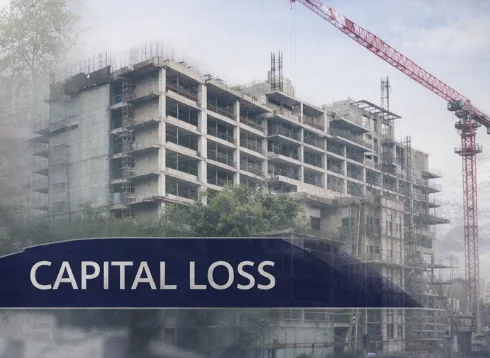
The Income Tax Appellate Tribunal (ITAT), Delhi Bench “A”, has dismissed Revenue appeals in the cases of Subhash Chander Agarwal and Shanti Devi for Assessment Year 2020–21, upholding the allowability of short-term capital loss (STCL) arising from sale of compulsorily convertible debentures (CCDs) and its set-off against long-term capital gains (LTCG).
The dispute centered on the assessee’s claim of STCL of ₹12.48 crore on sale of CCDs of M/s MKY Constructions Pvt. Ltd., which was set off against LTCG of ₹10.38 crore arising from sale of a jointly owned residential property. The Assessing Officer treated the transaction as a colourable device designed to avoid tax, alleging lack of commercial substance and disallowed the set-off along with carry forward of loss.
The Commissioner (Appeals), however, allowed the claim, holding that the transactions were genuine, supported by documentary evidence, banking channels, and independent valuation. The Revenue challenged this finding before the Tribunal.
The Tribunal noted that the investment in CCDs was made in the backdrop of financial distress faced by the assessee’s family-owned company, which had defaulted on bank loans due to project-related disputes. The assessee, being a guarantor, had raised funds by mortgaging personal property and infused capital into the company to settle bank liabilities. The subsequent sale of CCDs at a nominal value was supported by an independent valuation indicating negative net worth.
Importantly, the Tribunal found no evidence to dispute the genuineness of the transactions, including subscription, funding, or sale. It held that the Assessing Officer’s conclusions were based on questioning commercial prudence rather than identifying any sham or fictitious arrangement.
Rejecting the Revenue’s reliance on the doctrine of “substance over form,” the Tribunal held that mere coincidence of capital gain and loss in the same year does not establish a tax avoidance scheme in the absence of incriminating material. It further observed that business decisions taken under financial distress cannot be evaluated solely on profitability considerations.
Accordingly, the Tribunal upheld the order of the Commissioner (Appeals) and dismissed both Revenue appeals.
Full Judgement / Attachment
Full Judgement
Frequently asked questions about Income Tax Tribunal
- What is the Income Tax Appellate Tribunal (ITAT)?
- The ITAT, set up in 1941, is the second appellate authority in direct tax matters and the final fact-finding body. It hears appeals against orders of the Commissioner (Appeals) and certain other authorities, through benches across India.
- What is the time limit to file an appeal before the ITAT?
- An appeal must be filed within two months from the end of the month in which the order is communicated. This rule has applied since 1 October 2024 and continues under the Income-tax Act, 2025. The Tribunal can condone delay for sufficient cause.
- Can the ITAT stay a tax demand?
- Yes. The Tribunal can stay recovery of a disputed demand while an appeal is pending, usually on deposit of a part of the demand or furnishing security. Stays are granted for a limited period, and the appeal is expected to be decided within it.
- Where does an appeal go after the ITAT?
- An appeal against an ITAT order lies to the High Court, but only on a substantial question of law. A further appeal lies to the Supreme Court.
- How can White Collar Professional help with a ITAT matter?
- Post your requirement on White Collar Professional to receive proposals from verified Chartered Accountants and tax Advocates, compare them, and pay securely through the platform. This page also tracks the latest ITAT ITAT orders as they are reported.