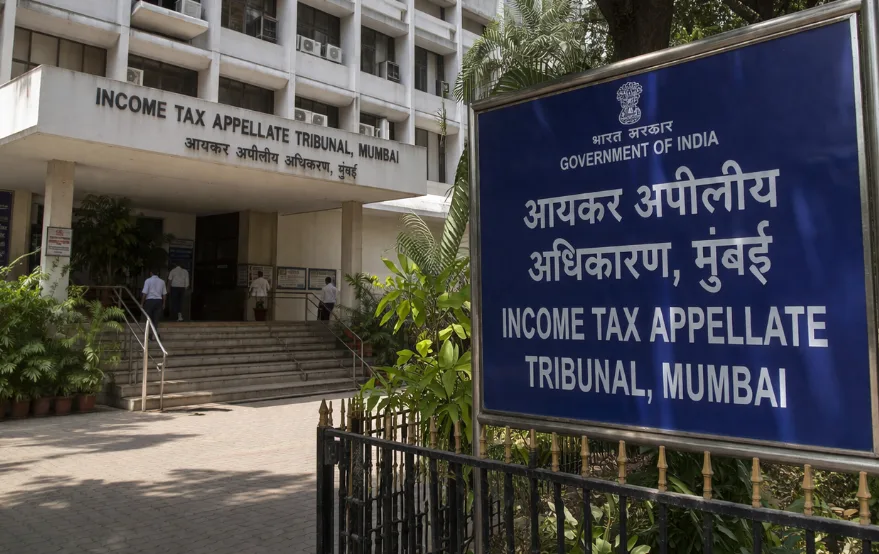
ITAT Mumbai: Absence of Irrevocability Clause Not Ground to Deny 12AB Registration; Orders Set Aside
Court / Authority
Income Tax Tribunal
Update / Judgement Date
29 Aug 2026
Source
WCP News Bulletin
Author
Manas Yadav — WCP Legal Desk
Reading Time
2 min read
View Count
The Income Tax Appellate Tribunal (ITAT), Mumbai Bench “A”, has allowed appeals filed by Amita Memorial Trust, holding that absence of an explicit irrevocability or dissolution clause in the trust deed cannot be a valid ground to deny registration under Sections 12AB and 80G of the Income-tax Act, 1961.
The dispute arose from the rejection of the trust’s application for renewal of registration under Section 12AB and approval under Section 80G by the Commissioner of Income Tax (Exemptions). The rejection was based on two grounds: first, the trust deed did not contain explicit clauses on irrevocability and dissolution; and second, the assessee’s response in Form 10AB indicating the trust as “irrevocable” was treated as furnishing false information, constituting a “specified violation” under Section 12AB(4).
The Tribunal examined the issue in light of recent binding precedent of the jurisdictional Bombay High Court in The Chamber of Tax Consultants & Ors. v. CIT(E), which clarified that public charitable trusts are deemed irrevocable by operation of law unless expressly made revocable. The High Court further held that absence of an explicit irrevocability clause cannot justify rejection of registration and that procedural constraints in Form 10AB compelling applicants to select “Yes” cannot be treated as furnishing false information.
Relying on this judgment, the Tribunal held that the action of the CIT(E) was contrary to statutory provisions and binding judicial precedent. It further observed that denial of registration on such technical grounds is unsustainable, particularly where the trust was already registered under earlier regimes and there was no change in facts.
Accordingly, the Tribunal quashed the orders rejecting registration and directed the grant of registration under Section 12AB as well as consequential approval under Section 80G.
Full Judgement / Attachment
Full Judgement
Frequently asked questions about Income Tax Tribunal
- What is the Income Tax Appellate Tribunal (ITAT)?
- The ITAT, set up in 1941, is the second appellate authority in direct tax matters and the final fact-finding body. It hears appeals against orders of the Commissioner (Appeals) and certain other authorities, through benches across India.
- What is the time limit to file an appeal before the ITAT?
- An appeal must be filed within two months from the end of the month in which the order is communicated. This rule has applied since 1 October 2024 and continues under the Income-tax Act, 2025. The Tribunal can condone delay for sufficient cause.
- Can the ITAT stay a tax demand?
- Yes. The Tribunal can stay recovery of a disputed demand while an appeal is pending, usually on deposit of a part of the demand or furnishing security. Stays are granted for a limited period, and the appeal is expected to be decided within it.
- Where does an appeal go after the ITAT?
- An appeal against an ITAT order lies to the High Court, but only on a substantial question of law. A further appeal lies to the Supreme Court.
- How can White Collar Professional help with a ITAT matter?
- Post your requirement on White Collar Professional to receive proposals from verified Chartered Accountants and tax Advocates, compare them, and pay securely through the platform. This page also tracks the latest ITAT ITAT orders as they are reported.