ITAT Delhi Remands Section 68 Addition on Directors’ Loans; Seeks Verification of Insurance Claim Trail
Court / Authority
Income Tax Tribunal
Update / Judgement Date
29 Aug 2026
Source
WCP News Bulletin
Author
Manas Yadav — WCP Legal Desk
Reading Time
2 min read
View Count
Key Facts and Tribunal Findings
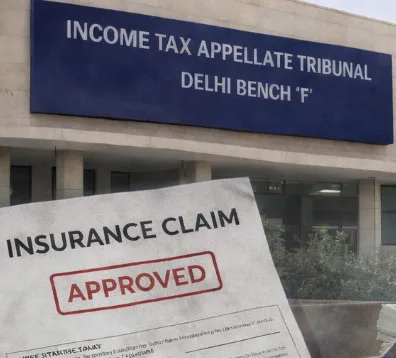
The Income Tax Appellate Tribunal (ITAT), Delhi Bench “F”, has set aside additions made under Section 68 of the Income-tax Act, 1961 in the case of Meenakshi Saree Centre Pvt. Ltd. for Assessment Year 2016–17, directing fresh verification of the source of unsecured loans received from its directors.
The assessee company had received unsecured loans aggregating to ₹7.77 crore from its directors, Ms. Richa Agarwal and Ms. Mohini Agarwal. During assessment proceedings, the Assessing Officer questioned the creditworthiness of the lenders, noting that their reported incomes were not commensurate with the magnitude of loans advanced. Further, notices issued under Section 133(6) remained unserved, and the bank statements of the lenders reflected multiple credits from third parties, raising doubts about the genuineness of the transactions. The Assessing Officer accordingly treated the loans as unexplained cash credits under Section 68, a view upheld by the Commissioner (Appeals).
Before the Tribunal, the assessee explained that the funds originated from insurance claims received upon the death of a key director, which were initially parked with close relatives due to security concerns and later returned to the directors, who then advanced the funds to the company. It was contended that the creditworthiness of the lenders was thus established through this trail of funds.
The Tribunal observed that while the explanation provided by the assessee outlined a plausible source of funds, the underlying facts required detailed verification, particularly the flow of funds from insurance proceeds to relatives and subsequently to the directors.
In the interest of justice, the Tribunal held that the matter could not be conclusively decided without proper factual examination. It accordingly set aside the orders of the lower authorities and restored the issue to the Assessing Officer for de novo adjudication, with liberty to the assessee to furnish additional evidence.
The appeal was allowed for statistical purposes.
Full Judgement / Attachment
Full Judgement
Frequently asked questions about Income Tax Tribunal
- What is the Income Tax Appellate Tribunal (ITAT)?
- The ITAT, set up in 1941, is the second appellate authority in direct tax matters and the final fact-finding body. It hears appeals against orders of the Commissioner (Appeals) and certain other authorities, through benches across India.
- What is the time limit to file an appeal before the ITAT?
- An appeal must be filed within two months from the end of the month in which the order is communicated. This rule has applied since 1 October 2024 and continues under the Income-tax Act, 2025. The Tribunal can condone delay for sufficient cause.
- Can the ITAT stay a tax demand?
- Yes. The Tribunal can stay recovery of a disputed demand while an appeal is pending, usually on deposit of a part of the demand or furnishing security. Stays are granted for a limited period, and the appeal is expected to be decided within it.
- Where does an appeal go after the ITAT?
- An appeal against an ITAT order lies to the High Court, but only on a substantial question of law. A further appeal lies to the Supreme Court.
- How can White Collar Professional help with a ITAT matter?
- Post your requirement on White Collar Professional to receive proposals from verified Chartered Accountants and tax Advocates, compare them, and pay securely through the platform. This page also tracks the latest ITAT ITAT orders as they are reported.