CBIC Notifies Expanded Jurisdiction of Principal Commissioner of Customs, Visakhapatnam Under Notification 26/2026-Customs (N.T.)
Court / Authority
Income Tax Tribunal
Update / Judgement Date
18 Aug 2026
Source
WCP News Bulletin
Author
Manas Yadav — WCP Legal Desk
Reading Time
2 min read
The Central Board of Indirect Taxes and Customs (CBIC) has issued Notification No. 26/2026-Customs (N.T.) dated 16 March 2026, amending Notification No. 21/2022-Customs (N.T.) to revise the territorial and functional jurisdiction of the Principal Commissioner of Customs, Visakhapatnam.
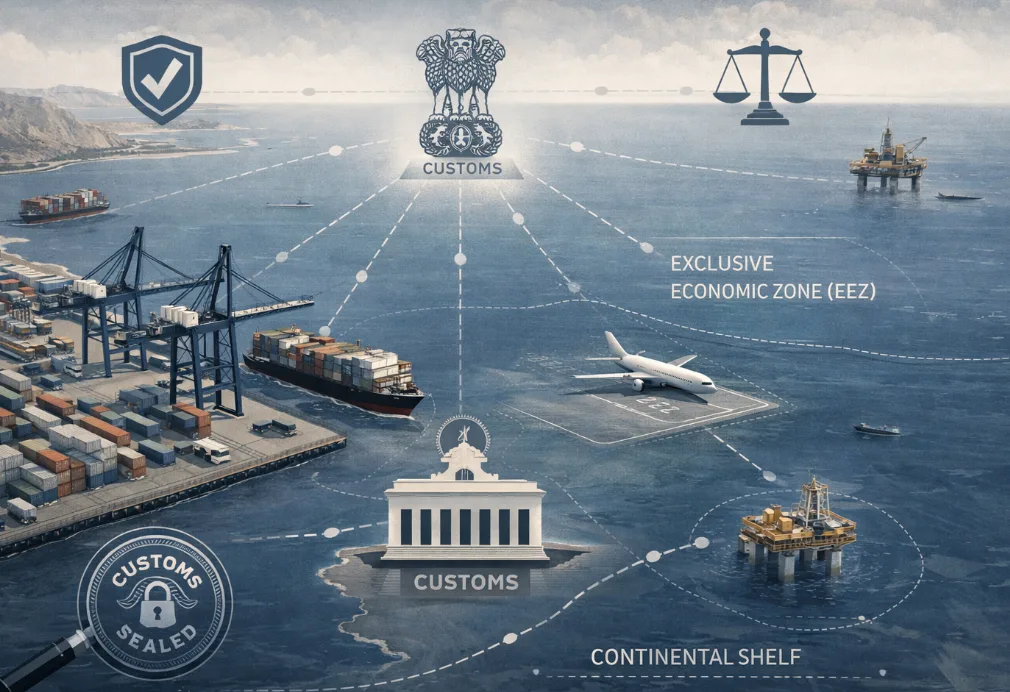
The amendment substitutes Serial No. 26 in the existing notification, significantly expanding the jurisdictional scope of the Visakhapatnam Customs Commissionerate. The revised entry now expressly includes key maritime, aviation, and logistics infrastructure such as the Port of Visakhapatnam, Gangavaram Port, Visakhapatnam International Airport, and Container Freight Station at Bayyavaram. In addition to core port and airport facilities, the notification extends jurisdiction to Special Economic Zones (SEZs), Export Oriented Units (EOUs), Inland Container Depots (ICDs), and warehouses located across multiple districts in Andhra Pradesh, including Anakapalli, Alluri Sitharama Raju, Visakhapatnam, Vizianagaram, Parvathipuram Manyam, and Srikakulam.
A notable inclusion is the extension of jurisdiction to the Continental Shelf and Exclusive Economic Zone (EEZ) of India adjacent to the Andhra Pradesh coastline, where the Customs Act, 1962 has been made applicable through prior notification of the Ministry of External Affairs. The notification has been issued under Sections 3, 4, and 5 of the Customs Act, 1962, which empower the Board to appoint officers and define their jurisdiction. It comes into effect from the date of publication in the Official Gazette.
Practical Implications
The notification reflects a consolidation and rationalization of Customs jurisdiction in a strategically significant maritime region. By explicitly covering ports, SEZs, ICDs, and offshore zones within a unified administrative framework, the CBIC has sought to streamline oversight and reduce jurisdictional fragmentation. The inclusion of offshore areas such as the Continental Shelf and EEZ is particularly significant. It reinforces the legal position that customs enforcement extends beyond territorial waters where statutory notifications have operationalized the applicability of the Customs Act. This has implications for offshore resource activities, including oil exploration and marine logistics.
From a compliance perspective, the expanded jurisdiction centralizes administrative authority for a wide range of trade and logistics operations under a single Commissionerate. This is likely to improve coordination, reduce procedural delays, and provide clarity for businesses operating across multiple facilities within the region.
Full Judgement / Attachment
Full Judgement