ITAT Delhi: Aborted IPO Expenses Held Revenue; Forex Gains Eligible for Section 10B, Forward Contract Loss Not Speculative
Court / Authority
Income Tax Tribunal
Update / Judgement Date
19 Aug 2026
Source
WCP News Bulletin
Author
Manas Yadav — WCP Legal Desk
Reading Time
3 min read

Key Facts and Tribunal Findings
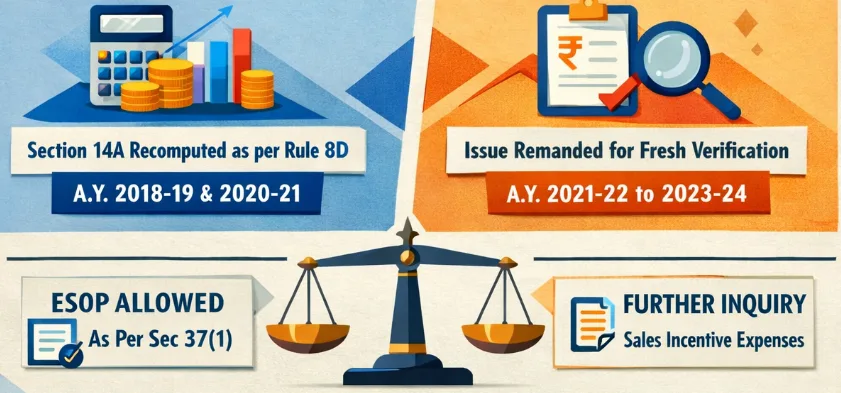
The Delhi ITAT, in a batch of cross-appeals involving M/s Orient Craft Ltd. across multiple assessment years, delivered a comprehensive ruling addressing IPO expenses, Section 10B deduction, disallowance under Section 14A, product development expenditure, and treatment of forex forward contract losses. On the issue of IPO expenses for AY 2009–10, the Tribunal held that expenditure incurred for a proposed public issue, which was ultimately aborted, did not result in creation of any capital asset or enduring benefit. Accordingly, such expenditure was allowable as revenue expenditure under Section 37(1), distinguishing it from cases where capital expansion is actually achieved.
For AY 2010–11, the Tribunal allowed deduction under Section 10B on foreign exchange differences and excess provisions written back, holding that such income had a direct nexus with export business operations of the assessee, a 100% export-oriented unit. On the Revenue’s appeals, the Tribunal upheld deletion of additions relating to product development expenses across multiple years, following binding precedent of the Delhi High Court. It rejected the Revenue’s attempt to treat such expenditure as deferred revenue, holding that in absence of statutory provision, spreading of revenue expenditure is impermissible. Regarding disallowance under Section 14A, the Tribunal held that such disallowance cannot exceed the exempt income earned during the year, aligning with settled High Court jurisprudence.
On the treatment of losses arising from settlement of forward contracts, the ITAT held that such losses were not speculative in nature. It found that the contracts were entered into as hedging instruments in the course of export business to mitigate foreign exchange risk, thereby qualifying as normal business losses. Accordingly, the assessee’s appeals were allowed, while the Revenue’s appeals were dismissed.
Legal Analysis and Practical Implications
The ruling reinforces several settled but frequently litigated principles in tax jurisprudence. First, it clarifies that aborted capital-raising exercises do not result in enduring benefit and therefore related expenditure retains revenue character. This distinction is critical in differentiating between actual capital expansion and failed attempts. Second, the Tribunal’s approach to Section 10B emphasizes the “first-degree nexus” test, holding that income intrinsically linked to export operations—such as forex fluctuations and provision reversals—qualifies for deduction despite being classified as “other income” in financial statements.
On product development expenses, the decision rejects the concept of deferred revenue expenditure in absence of statutory backing, reinforcing that revenue expenses cannot be artificially spread over multiple years based on perceived future benefit. The ruling on Section 14A provides further clarity by capping disallowance to actual exempt income, preventing disproportionate adjustments.
Finally, the treatment of forex forward contract losses as business losses underscores the importance of commercial purpose. Where such contracts are entered into as hedging mechanisms integral to business operations, they fall outside the ambit of speculative transactions under Section 43(5).
Full Judgement / Attachment
Full Judgement