ITAT Delhi allows gratuity deduction despite journal entry transfer under Sections 40A(7) and 43B
Court / Authority
Income Tax Tribunal
Update / Judgement Date
21 Jun 2026
Source
WCP News Bulletin
Author
Manas Yadav — WCP Legal Desk
Reading Time
2 min read

Background
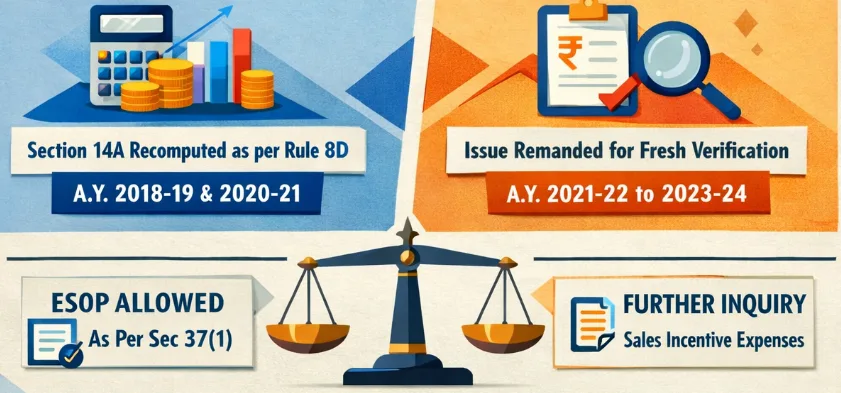
The Delhi Bench ‘A’ of the Income Tax Appellate Tribunal has allowed the appeal filed by Adani Tracks Management Service Limited (formerly known as Adani Tracks Management Service Pvt. Ltd.) for Assessment Year 2020–21, holding that transfer of gratuity liability to another group entity on account of employee transfer amounts to valid discharge of liability. The appeal arose from an intimation issued under Section 143(1) by the Central Processing Centre, Bengaluru, wherein gratuity expenditure of ₹9.27 lakh was disallowed by invoking Section 43B. The Commissioner of Income Tax (Appeals), NFAC, partly upheld the disallowance, allowing gratuity actually paid to one employee but sustaining disallowance of ₹6.51 lakh relating to another employee whose services were transferred to a different group company.
The Revenue contended that the amount of ₹6.51 lakh represented only a provision for gratuity, effected through a journal entry, and not “actual payment” as contemplated under Sections 40A(7) and 43B of the Income Tax Act, 1961. Allowing the assessee’s appeal, the Tribunal observed that the employee had rendered services to the assessee until his transfer and that the corresponding gratuity liability had accrued. The Bench held that upon transfer of the employee, the assessee also transferred the accumulated gratuity liability to the transferee entity through proper accounting entries. This, according to the Tribunal, constituted discharge of liability, even though payment was not made directly to the employee.
Outcome
The Tribunal reasoned that in cases of employee transfer within group entities, gratuity liability follows the continuity of service, and the employer may discharge such liability either by direct payment to the employee or by transferring the liability to the new employer. Merely because the discharge was effected through a journal entry did not render it a non-payment for the purposes of Section 43B. Accordingly, the disallowance was deleted and the assessee’s appeal was allowed in full.
Full Judgement / Attachment
Full Judgement