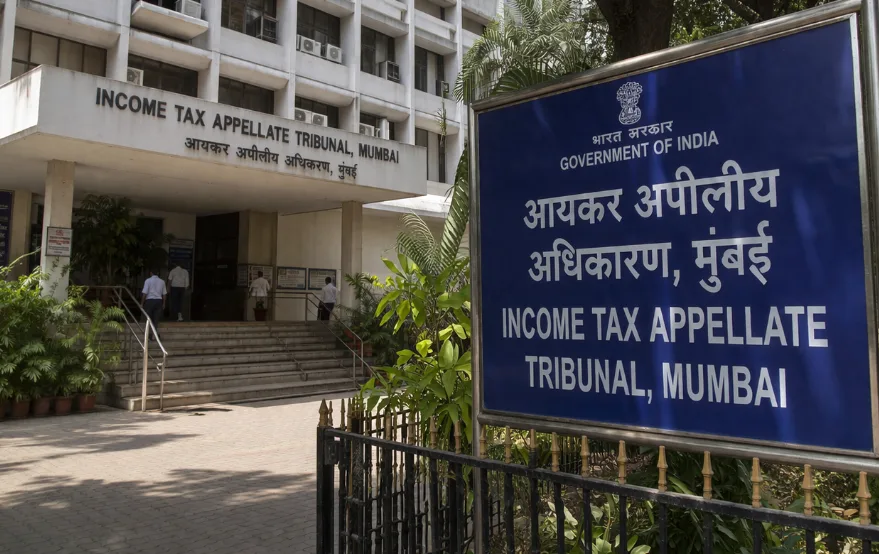
ITAT Delhi Restricts Disallowance to ₹1 Lakh in Absence of Substantial Business Activity; Partial Relief Granted
Court / Authority
Income Tax Tribunal
Update / Judgement Date
23 Aug 2026
Source
WCP News Bulletin
Author
Manas Yadav — WCP Legal Desk
Reading Time
2 min read
View Count

Key Facts and Tribunal Findings
The Income Tax Appellate Tribunal (ITAT), Delhi Bench, partly allowed the appeal of BSM Developers Pvt. Ltd. for Assessment Year 2014–15, substantially reducing disallowance of business expenditure made by the Assessing Officer and upheld by the Commissioner of Income Tax (Appeals) [CIT(A)]. The dispute pertained to disallowance of expenses aggregating to ₹22.41 lakh, including employee expenses, establishment expenses, and finance charges. The Assessing Officer had disallowed these expenses on the ground that the assessee had not carried out any substantial business activity during the year, noting that the major portion of income comprised rental income from house property.
The CIT(A) partly allowed the appeal by granting relief of ₹1.70 lakh but upheld the balance disallowance of ₹20.71 lakh, observing that the assessee failed to demonstrate that the claimed expenses were incurred wholly and exclusively for business purposes. It was further held that the expenses appeared to be related to earning rental income, for which only standard deduction under Section 24 is permissible. Before the Tribunal, it was noted that the assessee had declared income of ₹76,223 from trading in building materials during the year. While the scale of such activity was limited, the Tribunal held that it could not be concluded that no business activity existed at all.
In view of the facts, the Tribunal declined to undertake a detailed item-wise examination of expenses and instead adopted an estimation approach. It restricted the disallowance to a lump sum of ₹1 lakh, granting substantial relief to the assessee.
Legal Analysis
The Tribunal’s decision reflects a pragmatic approach in cases involving mixed income streams and limited business activity. While acknowledging that the assessee failed to fully substantiate the nexus of expenses with business operations, it also rejected the conclusion that no business existed. By resorting to estimation, the Tribunal balanced the absence of detailed evidence with the existence of some level of business activity. The direction that such estimation should not be treated as a precedent underscores the fact-specific nature of the ruling.
Full Judgement / Attachment
Full Judgement
Frequently asked questions about Income Tax Tribunal
- What is the Income Tax Appellate Tribunal (ITAT)?
- The ITAT, set up in 1941, is the second appellate authority in direct tax matters and the final fact-finding body. It hears appeals against orders of the Commissioner (Appeals) and certain other authorities, through benches across India.
- What is the time limit to file an appeal before the ITAT?
- An appeal must be filed within two months from the end of the month in which the order is communicated. This rule has applied since 1 October 2024 and continues under the Income-tax Act, 2025. The Tribunal can condone delay for sufficient cause.
- Can the ITAT stay a tax demand?
- Yes. The Tribunal can stay recovery of a disputed demand while an appeal is pending, usually on deposit of a part of the demand or furnishing security. Stays are granted for a limited period, and the appeal is expected to be decided within it.
- Where does an appeal go after the ITAT?
- An appeal against an ITAT order lies to the High Court, but only on a substantial question of law. A further appeal lies to the Supreme Court.
- How can White Collar Professional help with a ITAT matter?
- Post your requirement on White Collar Professional to receive proposals from verified Chartered Accountants and tax Advocates, compare them, and pay securely through the platform. This page also tracks the latest ITAT ITAT orders as they are reported.