ITAT Kolkata: No DTAA Relief on DDT; Refund Claim Rejected for Failure to File Return Under Section 239
Court / Authority
Income Tax Tribunal
Update / Judgement Date
22 Aug 2026
Source
WCP News Bulletin
Author
Manas Yadav — WCP Legal Desk
Reading Time
2 min read
Key Facts and Tribunal Findings
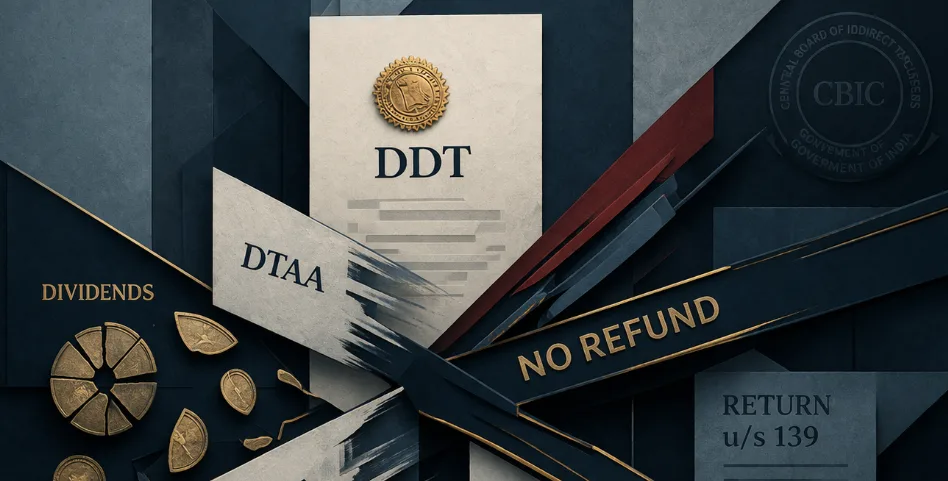
The Income Tax Appellate Tribunal (ITAT), Kolkata Bench, dismissed appeals filed by Philips India Limited for Assessment Years 2008–09 to 2015–16, rejecting its claim for refund of excess Dividend Distribution Tax (DDT) allegedly paid in excess of the rate prescribed under the India–Netherlands Double Taxation Avoidance Agreement (DTAA). The assessee had distributed dividends to its parent entity, Philips Netherlands, and paid DDT under Section 115-O of the Income Tax Act. Subsequently, it sought a refund of DDT on the ground that the applicable rate under the DTAA was lower. The claim was made through an application under Section 237, which was treated by the Assessing Officer as a rectification application under Section 154 and rejected.
The CIT(A) upheld the rejection, relying on the Special Bench ruling in DCIT v. Tata Oil India Pvt. Ltd., holding that DDT is a tax on the company’s distributed profits and not on shareholders, and therefore DTAA provisions are not triggered. Before the Tribunal, the assessee contended that judicial precedents supported its position and that refund should be granted. However, the Tribunal upheld the findings of the lower authorities. It held that DDT is a statutory levy on the company distributing profits and does not constitute tax on shareholder income. Consequently, the provisions of DTAA do not apply to such levy. Further, the Tribunal noted that the assessee had not filed a return of income under Section 139 for claiming refund, as mandated under Section 239(1). This procedural lapse rendered the refund claim non-maintainable.
Accordingly, the Tribunal dismissed all appeals and affirmed the orders of the CIT(A).
Legal Analysis
The Tribunal reaffirmed the settled position that DDT is a tax on distributed profits of the company and not on the income of shareholders. As a result, DTAA provisions governing taxation of dividend income do not extend to DDT liability.
The decision also underscores the mandatory procedural requirement under Section 239 that refund claims must be made through a valid return of income. Failure to comply with this statutory condition is sufficient to invalidate the claim, irrespective of substantive arguments.
Full Judgement / Attachment
Full Judgement