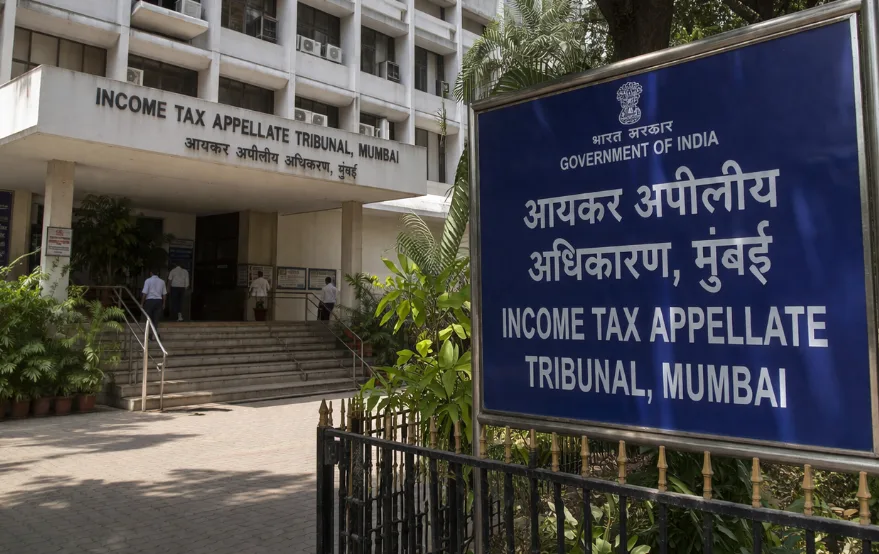
ITAT Mumbai Allows Bad Debt Deduction of ₹14.62 Lakh; Holds Write-Off Sufficient Under Section 36(1)(vii)
Court / Authority
Income Tax Tribunal
Update / Judgement Date
24 Aug 2026
Source
WCP News Bulletin
Author
Manas Yadav — WCP Legal Desk
Reading Time
2 min read
View Count

Key Facts and Tribunal Findings
The Income Tax Appellate Tribunal (ITAT), Mumbai Bench, allowed the appeal of Kishor Chandrakant Dharia for Assessment Year 2023–24, deleting disallowance of ₹14.62 lakh claimed as bad debts under Section 36(1)(vii) read with Section 36(2) of the Income Tax Act.
The assessee, engaged in operating a petrol pump through a proprietorship concern, had written off bad debts arising from business transactions with multiple customers. The Assessing Officer disallowed the claim on grounds that the assessee failed to furnish complete details such as PAN, addresses of debtors, efforts made for recovery, and proof that such debts were offered to tax in earlier years. The disallowance was upheld by the Commissioner (Appeals).
Before the Tribunal, the assessee produced ledger accounts and supporting documentation demonstrating that the debts were part of regular business transactions and had been considered in earlier income computations. It was also shown that the amounts were written off in the books of account during the relevant year.
The Tribunal noted inconsistencies in the appellate order, observing that while the CIT(A) acknowledged receipt of submissions, the same were not considered while adjudicating the issue.
Relying on the Supreme Court ruling in TRF Ltd., the Tribunal held that post-1989, it is not necessary for the assessee to establish that the debt has become irrecoverable; it is sufficient if the debt is written off in the books of account, subject to conditions under Section 36(2).
Finding that these conditions were satisfied, the Tribunal held the disallowance to be unsustainable and directed deletion of the entire addition.
Full Judgement / Attachment
Full Judgement
Frequently asked questions about Income Tax Tribunal
- What is the Income Tax Appellate Tribunal (ITAT)?
- The ITAT, set up in 1941, is the second appellate authority in direct tax matters and the final fact-finding body. It hears appeals against orders of the Commissioner (Appeals) and certain other authorities, through benches across India.
- What is the time limit to file an appeal before the ITAT?
- An appeal must be filed within two months from the end of the month in which the order is communicated. This rule has applied since 1 October 2024 and continues under the Income-tax Act, 2025. The Tribunal can condone delay for sufficient cause.
- Can the ITAT stay a tax demand?
- Yes. The Tribunal can stay recovery of a disputed demand while an appeal is pending, usually on deposit of a part of the demand or furnishing security. Stays are granted for a limited period, and the appeal is expected to be decided within it.
- Where does an appeal go after the ITAT?
- An appeal against an ITAT order lies to the High Court, but only on a substantial question of law. A further appeal lies to the Supreme Court.
- How can White Collar Professional help with a ITAT matter?
- Post your requirement on White Collar Professional to receive proposals from verified Chartered Accountants and tax Advocates, compare them, and pay securely through the platform. This page also tracks the latest ITAT ITAT orders as they are reported.