ITAT Mumbai on Allocation of Common Expenses and Export Deductions
Court / Authority
Income Tax Tribunal
Update / Judgement Date
29 Jun 2026
Source
WCP News Bulletin
Author
Manas Yadav — WCP Legal Desk
Reading Time
2 min read

Background
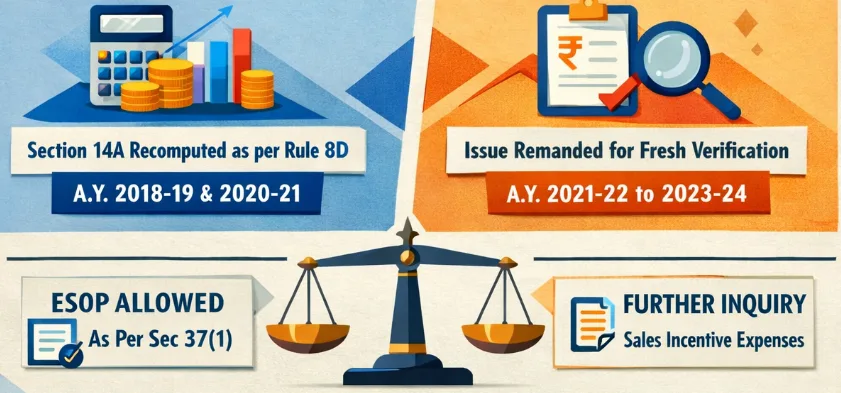
The Mumbai “H” Bench of the Income Tax Appellate Tribunal has passed a consolidated order in a batch of appeals involving Hindustan Unilever Ltd., dealing with recurring issues relating to allocation of common expenses, export-linked deductions and allied adjustments under the Income Tax Act. The Tribunal examined whether common head-office expenses could be allocated to eligible industrial undertakings for the purposes of deductions under Sections 10B and 80-IB. Upholding the consistent view taken in the assessee’s own case in earlier assessment years, the Bench held that allocation cannot be made in isolation. It ruled that if common expenses are to be apportioned, common income must also be correspondingly allocated, and such allocation must be based on a clear nexus with the eligible units.
Export Turnover, Miscellaneous Receipts and Remand to AO
On the issue of export-related deductions, including computation of export turnover and treatment of unrealised export proceeds under Section 80HHC, the Tribunal restored the matter to the Assessing Officer for fresh consideration. It directed that the claims be re-examined in accordance with law and in the light of factual details and evidences to be furnished by the assessee, following the approach adopted by coordinate benches in earlier years.
The Bench also remitted issues concerning the eligibility of certain miscellaneous receipts credited to the profit and loss account of export-oriented units for deduction under Section 10B. The Tribunal observed that where such receipts are claimed to arise from normal manufacturing activities, the assessee must be given an opportunity to establish the requisite nexus before a final determination is made.
Several other grounds raised by both the Revenue and the assessee, which were either covered by earlier decisions or not pressed during the course of hearing, were disposed of accordingly. Reiterating the importance of judicial consistency, the Tribunal emphasised that recurring issues in the assessee’s own case should ordinarily be decided in line with settled precedent unless distinguishable on facts.
The appeals were thus partly allowed for statistical purposes, with specific issues remanded for de novo adjudication in accordance with law.
Full Judgement / Attachment
Full Judgement