ITAT Mumbai Quashes Reassessment Against Armstrong Energy, Holds CIT(A) Lacked Power to Remand Regular Assessment Under Section 251
Court / Authority
Income Tax Tribunal
Update / Judgement Date
15 Jul 2026
Source
WCP News Bulletin
Author
Manas Yadav — WCP Legal Desk
Reading Time
2 min read
View Count
5
Background
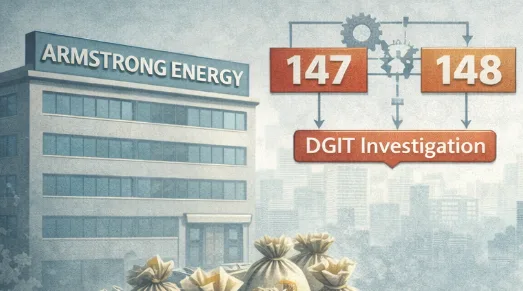
The Assessing Officer had reopened the assessment under Sections 147 and 148 based on information from the DGIT (Investigation), alleging that Armstrong Energy had received bogus share capital and share premium through accommodation entry providers linked to Praveen Jain and Ashish Chokhani. Additions exceeding ₹11 crore were made under Section 68. On appeal, the CIT(A) invoked Section 251(1)(a) and set aside the assessment, remanding the matter for fresh consideration.
The Tribunal examined whether the CIT(A) had jurisdiction to remand the assessment after the Finance Act, 2024 amendment, whether the reassessment itself was valid when identical additions had already been made in AY 2009–10, and whether sanction under Section 151 had been mechanically granted.
Analysis and Findings
The Bench held that even post-amendment, Section 251(1)(a) permits remand only in best-judgment assessments under Section 144, whereas the present case arose from a regular assessment under Section 143(3). The CIT(A)’s remand was therefore without jurisdiction and void. More critically, the Tribunal found that the very same share capital receipts had already been taxed in AY 2009–10, resulting in duplication. Since no income had actually escaped assessment, the “reasons to believe” were fundamentally flawed, rendering the reopening invalid. The approval under Section 151 was also struck down as mechanical and without independent application of mind.
Consequently, the reassessment proceedings were quashed in entirety, reaffirming strict limits on reopening powers and appellate remand jurisdiction.
Full Judgement / Attachment
Full Judgement
Frequently asked questions about Income Tax Tribunal
- What is the Income Tax Appellate Tribunal (ITAT)?
- The ITAT, set up in 1941, is the second appellate authority in direct tax matters and the final fact-finding body. It hears appeals against orders of the Commissioner (Appeals) and certain other authorities, through benches across India.
- What is the time limit to file an appeal before the ITAT?
- An appeal must be filed within two months from the end of the month in which the order is communicated. This rule has applied since 1 October 2024 and continues under the Income-tax Act, 2025. The Tribunal can condone delay for sufficient cause.
- Can the ITAT stay a tax demand?
- Yes. The Tribunal can stay recovery of a disputed demand while an appeal is pending, usually on deposit of a part of the demand or furnishing security. Stays are granted for a limited period, and the appeal is expected to be decided within it.
- Where does an appeal go after the ITAT?
- An appeal against an ITAT order lies to the High Court, but only on a substantial question of law. A further appeal lies to the Supreme Court.
- How can White Collar Professional help with a ITAT matter?
- Post your requirement on White Collar Professional to receive proposals from verified Chartered Accountants and tax Advocates, compare them, and pay securely through the platform. This page also tracks the latest ITAT ITAT orders as they are reported.









