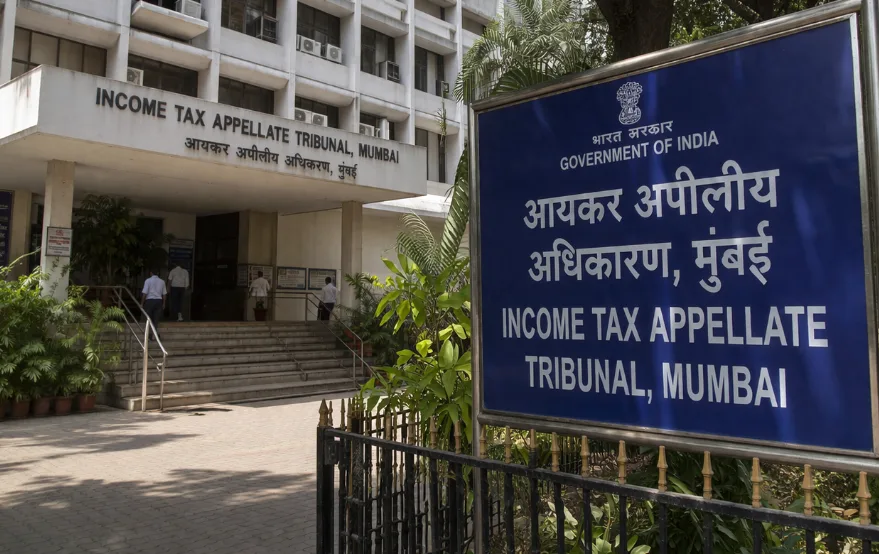
ITAT Mumbai Quashes Reassessment as Time-Barred; Applies ‘Surviving Time’ Principle Under Section 148
Court / Authority
Income Tax Tribunal
Update / Judgement Date
24 Aug 2026
Source
WCP News Bulletin
Author
Manas Yadav — WCP Legal Desk
Reading Time
2 min read
View Count
Key Facts and Tribunal Findings
The Income Tax Appellate Tribunal (ITAT), Mumbai Bench, allowed the cross-objection of the assessee, Kumar Ishwarlal Doshi, and held that reassessment proceedings initiated under Sections 147/148 for Assessment Year 2013–14 were time-barred.
The Revenue had challenged deletion of an addition of ₹2.15 crore made under Section 69A on account of alleged unexplained money received from entities linked to the Gautam Jain Group. However, the Tribunal first addressed the legal issue raised in the assessee’s cross-objection regarding validity of reassessment.
The assessee contended that the notice under Section 148 dated 21 July 2022 was issued beyond the permissible limitation period, applying the principles laid down by the Supreme Court in Union of India v. Rajeev Bansal. It was argued that after accounting for the extended timelines under the Taxation and Other Laws (Relaxation and Amendment of Certain Provisions) Act (TOLA) and the legal fiction created in Ashish Agarwal, only a limited “surviving period” remained for issuance of notice.
The Tribunal noted that the original notice under the old regime was issued on 25 June 2021, leaving only five days of limitation. After excluding periods as mandated under law and considering the date of reply filed by the assessee on 6 July 2022, the Tribunal held that the notice under Section 148 ought to have been issued by 11 July 2022.
Since the notice was issued on 21 July 2022, beyond the permissible timeframe, the Tribunal held it to be barred by limitation.
Accordingly, the reassessment proceedings were quashed, rendering the Revenue’s grounds on merits academic.
Legal Analysis
The Tribunal reaffirmed that reassessment proceedings under the new regime must strictly comply with limitation provisions under Section 149, as interpreted by the Supreme Court in Rajeev Bansal. It emphasised that the concept of “surviving time” post-TOLA and Ashish Agarwal must be carefully computed, and any notice issued beyond such period is jurisdictionally invalid.
Full Judgement / Attachment
Full Judgement
Frequently asked questions about Income Tax Tribunal
- What is the Income Tax Appellate Tribunal (ITAT)?
- The ITAT, set up in 1941, is the second appellate authority in direct tax matters and the final fact-finding body. It hears appeals against orders of the Commissioner (Appeals) and certain other authorities, through benches across India.
- What is the time limit to file an appeal before the ITAT?
- An appeal must be filed within two months from the end of the month in which the order is communicated. This rule has applied since 1 October 2024 and continues under the Income-tax Act, 2025. The Tribunal can condone delay for sufficient cause.
- Can the ITAT stay a tax demand?
- Yes. The Tribunal can stay recovery of a disputed demand while an appeal is pending, usually on deposit of a part of the demand or furnishing security. Stays are granted for a limited period, and the appeal is expected to be decided within it.
- Where does an appeal go after the ITAT?
- An appeal against an ITAT order lies to the High Court, but only on a substantial question of law. A further appeal lies to the Supreme Court.
- How can White Collar Professional help with a ITAT matter?
- Post your requirement on White Collar Professional to receive proposals from verified Chartered Accountants and tax Advocates, compare them, and pay securely through the platform. This page also tracks the latest ITAT ITAT orders as they are reported.