ITAT Mumbai Quashes Reassessment in Kashyap Mehta Case; Section 147 Proceedings Held Void Post Search
Court / Authority
Income Tax Tribunal
Update / Judgement Date
26 Aug 2026
Source
WCP News Bulletin
Author
Manas Yadav — WCP Legal Desk
Reading Time
3 min read
View Count
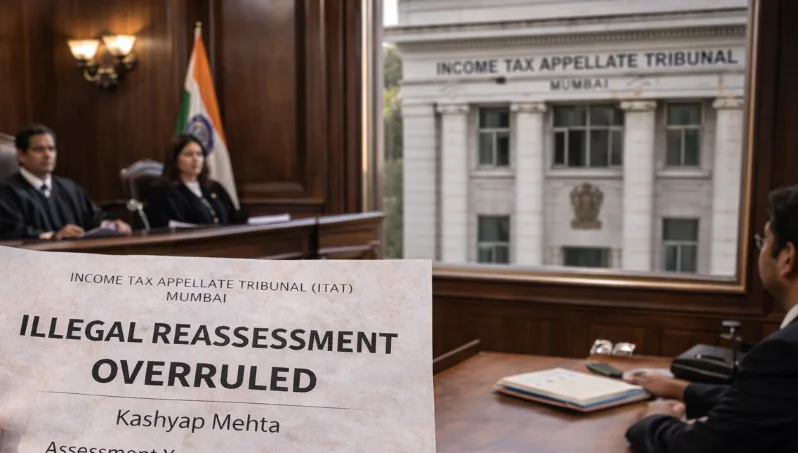
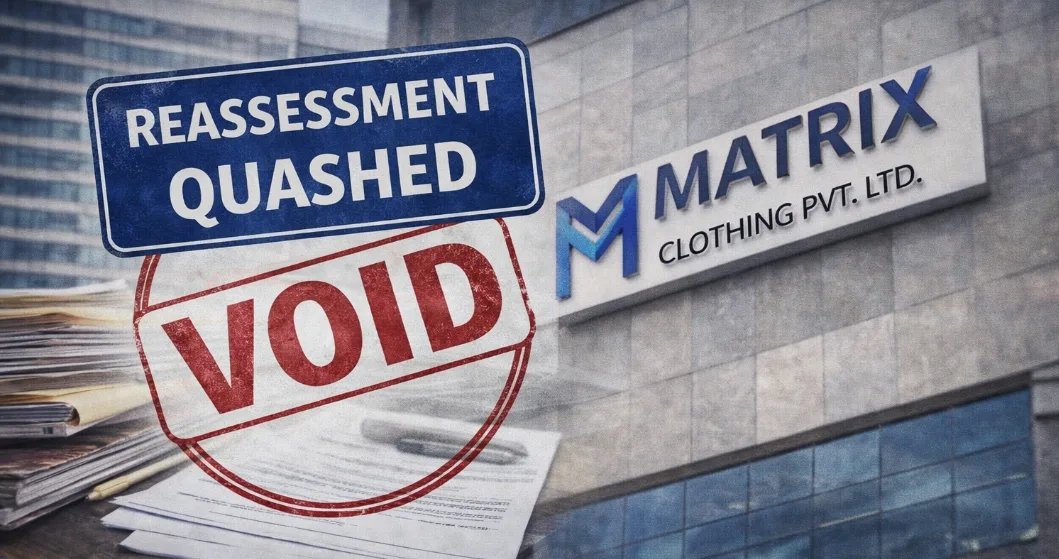
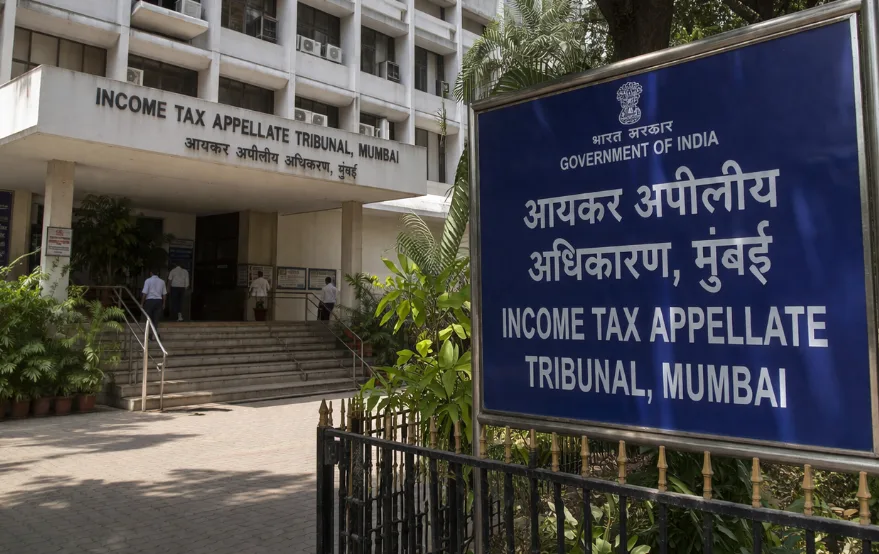
The Income Tax Appellate Tribunal (ITAT), Mumbai Bench, in a consolidated order, has quashed multiple reassessment proceedings against the assessee for Assessment Years 2011–12 to 2018–19, holding that the Assessing Officer (AO) lacked jurisdiction to invoke Section 147 once a search under Section 132 had been conducted.
The case arose from reassessment proceedings initiated on the basis of information received from the Investigation Wing alleging that the assessee had claimed bogus long-term capital gains (LTCG) through penny stock transactions. The AO treated the gains as unexplained cash credits under Section 68 and further added alleged commission expenditure under Section 69C. These additions were confirmed by the Commissioner of Income Tax (Appeals).
However, the Tribunal noted that a search had been conducted on 06.10.2017 and the very foundation of the reassessment proceedings was material unearthed during or connected with such search. In such circumstances, the statutory scheme mandates that assessments must be framed under Section 153A (or 153C, where applicable), and not under the general reassessment provisions of Section 147.
The Tribunal emphasized that once a search is initiated, any pending or subsequent reassessment proceedings under Section 147 abate, and the AO is required to proceed strictly within the framework of Section 153A. Reliance was placed on the settled principle that special provisions override general provisions, thereby rendering the invocation of Section 147 legally impermissible in search-related cases.
Further, the Tribunal relied on its earlier decision in the case of the assessee’s spouse, which arose from the same search and involved identical facts. In that decision, the reassessment proceedings were held to be void ab initio for lack of jurisdiction. Applying the same reasoning, the Tribunal held that the impugned reassessment orders suffered from the same jurisdictional defect.
The Tribunal also observed that the earlier reassessment order, which had already been quashed on jurisdictional grounds, could not form the basis for subsequent reassessment. Consequently, the additions made in later proceedings, being derivative in nature, could not survive.
In respect of assessments framed under Section 153A for subsequent years, the Tribunal further noted that no incriminating material was found during the course of search in the assessee’s premises to justify the additions. Relying on the law laid down by the Supreme Court in Abhisar Buildwell, it held that in the absence of incriminating material, no addition can be made in completed assessments.
Accordingly, the Tribunal held that the reassessment proceedings initiated under Section 147 were without jurisdiction and void ab initio, and the consequential additions on account of alleged bogus LTCG and commission expenditure were liable to be deleted. The appeals of the assessee were thus allowed in entirety.
Full Judgement / Attachment
Full Judgement
Frequently asked questions about Income Tax Tribunal
- What is the Income Tax Appellate Tribunal (ITAT)?
- The ITAT, set up in 1941, is the second appellate authority in direct tax matters and the final fact-finding body. It hears appeals against orders of the Commissioner (Appeals) and certain other authorities, through benches across India.
- What is the time limit to file an appeal before the ITAT?
- An appeal must be filed within two months from the end of the month in which the order is communicated. This rule has applied since 1 October 2024 and continues under the Income-tax Act, 2025. The Tribunal can condone delay for sufficient cause.
- Can the ITAT stay a tax demand?
- Yes. The Tribunal can stay recovery of a disputed demand while an appeal is pending, usually on deposit of a part of the demand or furnishing security. Stays are granted for a limited period, and the appeal is expected to be decided within it.
- Where does an appeal go after the ITAT?
- An appeal against an ITAT order lies to the High Court, but only on a substantial question of law. A further appeal lies to the Supreme Court.
- How can White Collar Professional help with a ITAT matter?
- Post your requirement on White Collar Professional to receive proposals from verified Chartered Accountants and tax Advocates, compare them, and pay securely through the platform. This page also tracks the latest ITAT ITAT orders as they are reported.