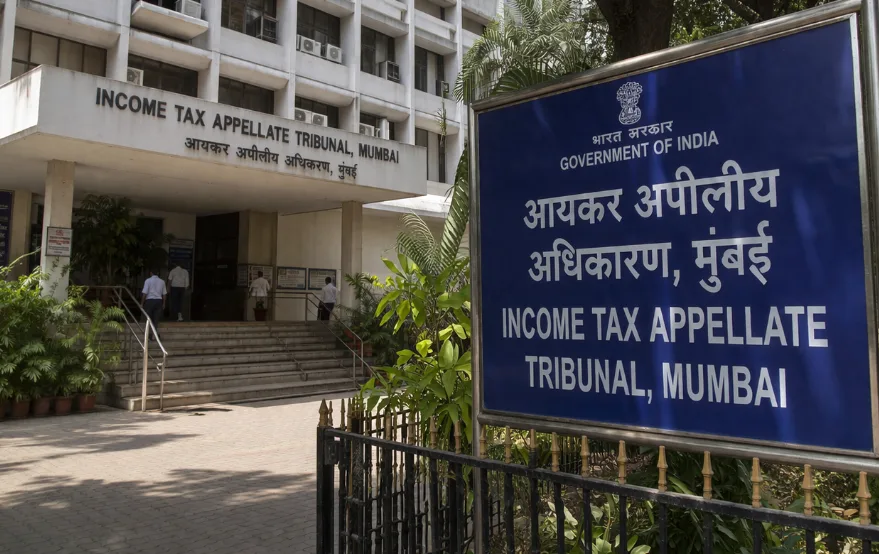
ITAT Mumbai Quashes Section 263 Revision in Mondelez Case; Holds DRP-Based Assessment Beyond PCIT’s Jurisdiction
Court / Authority
Income Tax Tribunal
Update / Judgement Date
26 Aug 2026
Source
WCP News Bulletin
Author
Manas Yadav — WCP Legal Desk
Reading Time
2 min read
View Count

Key Facts and Tribunal Findings
The Income Tax Appellate Tribunal (ITAT), Mumbai Bench, allowed the appeal filed by Mondelez India Foods Pvt. Ltd. for Assessment Year 2018–19, quashing the revisionary order passed by the Principal Commissioner of Income Tax under Section 263 of the Income Tax Act.
The dispute arose from a revision order wherein the PCIT sought to set aside the assessment framed under Section 143(3) read with Section 144C(13), alleging that the assessment was erroneous and prejudicial to the interests of the Revenue on multiple counts, including underassessment relating to termination costs, voluntary retirement expenses, ESOP costs, grants received, and forward contract gains and losses.
The assessee challenged the very jurisdiction of the PCIT to invoke Section 263, contending that the original assessment had been passed pursuant to binding directions issued by the Dispute Resolution Panel (DRP), a collegium of three Commissioners of Income Tax.
The Tribunal accepted the assessee’s contention, observing that the statutory framework under Section 144C mandates that the Assessing Officer must pass the final assessment order strictly in conformity with the DRP’s directions, without any further modification or independent application of mind. In such circumstances, the assessment order cannot be treated as erroneous merely because the PCIT holds a different view.
Relying on coordinate bench decisions, including Barclays Bank PLC v. CIT, the Tribunal held that Section 263 does not extend to revising assessment orders passed pursuant to DRP directions, as such orders are effectively the outcome of a collegiate decision-making process by authorities of equivalent rank.
The Tribunal further noted that permitting revision in such cases would indirectly override the binding nature of DRP directions, which is impermissible under the scheme of the Act.
Accordingly, the Tribunal held that the PCIT lacked jurisdiction to invoke Section 263 in the present case and quashed the revision order in entirety. All other grounds were rendered infructuous.
Full Judgement / Attachment
Full Judgement
Frequently asked questions about Income Tax Tribunal
- What is the Income Tax Appellate Tribunal (ITAT)?
- The ITAT, set up in 1941, is the second appellate authority in direct tax matters and the final fact-finding body. It hears appeals against orders of the Commissioner (Appeals) and certain other authorities, through benches across India.
- What is the time limit to file an appeal before the ITAT?
- An appeal must be filed within two months from the end of the month in which the order is communicated. This rule has applied since 1 October 2024 and continues under the Income-tax Act, 2025. The Tribunal can condone delay for sufficient cause.
- Can the ITAT stay a tax demand?
- Yes. The Tribunal can stay recovery of a disputed demand while an appeal is pending, usually on deposit of a part of the demand or furnishing security. Stays are granted for a limited period, and the appeal is expected to be decided within it.
- Where does an appeal go after the ITAT?
- An appeal against an ITAT order lies to the High Court, but only on a substantial question of law. A further appeal lies to the Supreme Court.
- How can White Collar Professional help with a ITAT matter?
- Post your requirement on White Collar Professional to receive proposals from verified Chartered Accountants and tax Advocates, compare them, and pay securely through the platform. This page also tracks the latest ITAT ITAT orders as they are reported.