ITAT Mumbai Upholds Validity of Reassessment Under Faceless Regime; Remands Additions for Fresh Adjudication
Court / Authority
Income Tax Tribunal
Update / Judgement Date
25 Aug 2026
Source
WCP News Bulletin
Author
Manas Yadav — WCP Legal Desk
Reading Time
2 min read
View Count

Key Facts and Tribunal Findings
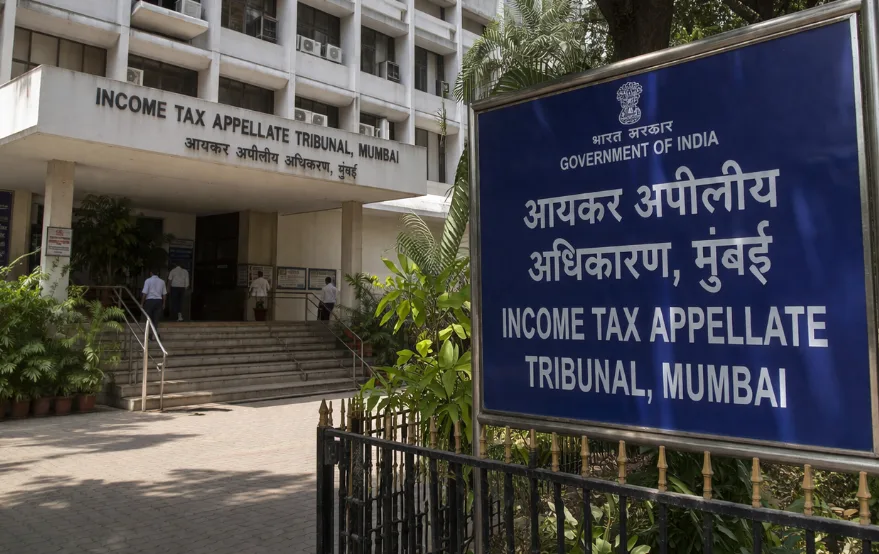
The Income Tax Appellate Tribunal (ITAT), Mumbai Bench, partly allowed the appeal of Arham Anmol Projects Pvt. Ltd. for Assessment Year 2019–20, upholding the validity of reassessment proceedings under Sections 147 read with 144B while remanding additions on merits for fresh examination.
The assessee, engaged in real estate and rental activities, was subjected to reassessment based on financial transaction data reflected in the Insight Portal. In the absence of adequate compliance, the Assessing Officer completed assessment ex parte under Section 147 read with Section 144B, determining total income at ₹7.22 crore against returned income of ₹58.16 lakh.
Major additions included ₹4.54 crore as short-term capital gains by adopting nil cost of acquisition, estimated income on contract receipts and professional fees, and addition of ₹2 crore towards rent receipts based on third-party data.
Before the Tribunal, the assessee challenged the validity of reassessment on the ground that notice under Section 143(2) was issued by the Jurisdictional Assessing Officer while assessment was completed by the faceless Assessment Unit.
The Tribunal rejected this contention, holding that issuance of notice under Section 143(2) by a competent Jurisdictional Assessing Officer satisfies the mandatory jurisdictional requirement. It observed that under the faceless regime, functions of issuance of notice and completion of assessment can be validly bifurcated, and such procedural allocation does not invalidate proceedings.
On merits, however, the Tribunal noted that additions were made mechanically due to non-compliance, without proper verification of cost of acquisition, books of account, or supporting documents. It held that determination of capital gains by adopting nil cost and estimation of income without examination of records was not sustainable.
Accordingly, all additions were set aside and the matter was remanded to the Assessing Officer for fresh adjudication after providing adequate opportunity to the assessee. The appeal was allowed for statistical purposes.
Full Judgement / Attachment
Full Judgement
Frequently asked questions about Income Tax Tribunal
- What is the Income Tax Appellate Tribunal (ITAT)?
- The ITAT, set up in 1941, is the second appellate authority in direct tax matters and the final fact-finding body. It hears appeals against orders of the Commissioner (Appeals) and certain other authorities, through benches across India.
- What is the time limit to file an appeal before the ITAT?
- An appeal must be filed within two months from the end of the month in which the order is communicated. This rule has applied since 1 October 2024 and continues under the Income-tax Act, 2025. The Tribunal can condone delay for sufficient cause.
- Can the ITAT stay a tax demand?
- Yes. The Tribunal can stay recovery of a disputed demand while an appeal is pending, usually on deposit of a part of the demand or furnishing security. Stays are granted for a limited period, and the appeal is expected to be decided within it.
- Where does an appeal go after the ITAT?
- An appeal against an ITAT order lies to the High Court, but only on a substantial question of law. A further appeal lies to the Supreme Court.
- How can White Collar Professional help with a ITAT matter?
- Post your requirement on White Collar Professional to receive proposals from verified Chartered Accountants and tax Advocates, compare them, and pay securely through the platform. This page also tracks the latest ITAT ITAT orders as they are reported.