Supreme Court Requires Recording of Plaint Rejections Before Suit Registration
Court / Authority
Supreme Court of India
Update / Judgement Date
05 Nov 2026
Source
WCP News Bulletin
Author
Dipanshi Bansal — WCP Legal Desk
Reading Time
4 min read
View Count
1
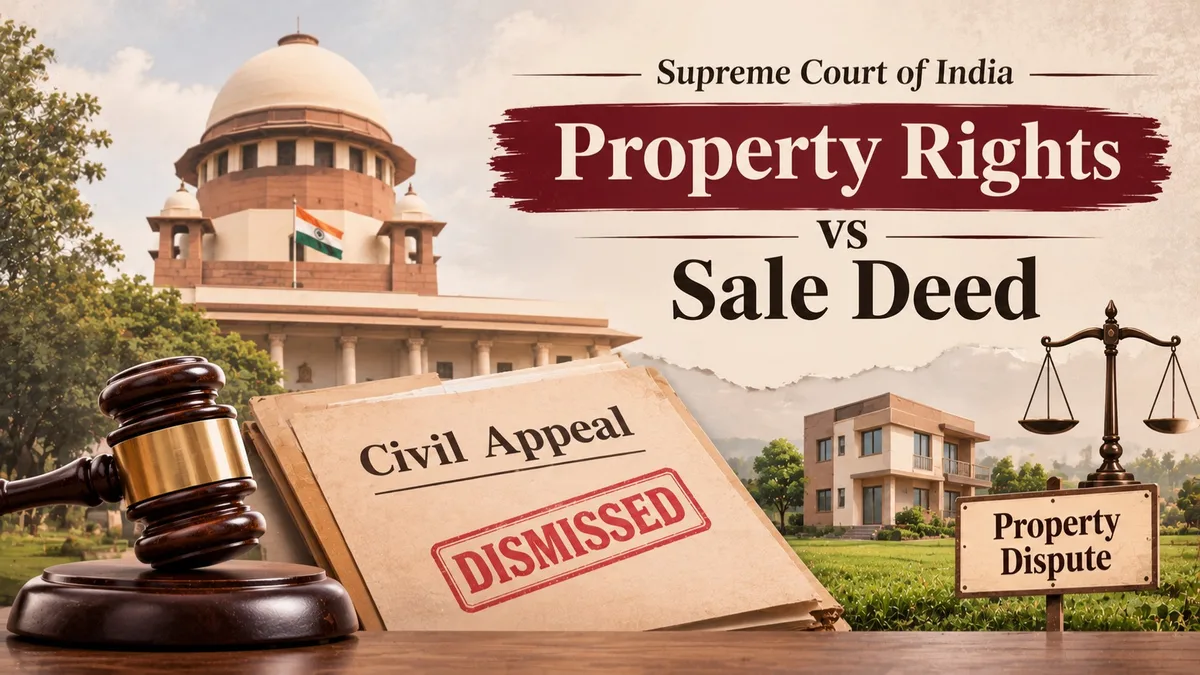
The Supreme Court set aside orders rejecting an unnumbered plaint before registration and restored the plaint for registration and adjudication. It also directed that trial courts must record every pre-registration rejection of a plaint in a register maintained for that purpose, so that the decision remains traceable and can be challenged or referred to in later proceedings.
Key Highlights :
- The appeal concerned rejection of a plaint under Order VII Rule 11 of the Code of Civil Procedure, 1908, before registration of the suit.
- The plaintiff claimed ownership under a registered settlement deed dated 26 February 2021 and alleged that a sale deed dated 15 March 2021 had been executed as security for a ₹25,00,000 loan.
- The plaintiff sought a declaration of title and a permanent injunction after alleging an attempt to take forcible possession on 25 May 2025.
- The Supreme Court set aside the trial court’s order dated 11 July 2025 and the High Court Division Bench judgment dated 16 October 2025.
- The plaint was restored for registration; the suit must thereafter be decided on its merits, uninfluenced by the Supreme Court’s observations.
- The Court directed that pre-registration plaint rejections be entered in a register under Order IV Rule 2; High Courts may take steps under Section 122 if the applicable rules or Civil Manual do not provide for it.
Background :
- The plaintiff alleged that a registered sale deed in the defendant’s name was only intended as security for a loan and that possession remained with him.
- The trial court rejected the plaint before it was numbered or entered in the Register of Suits; the High Court upheld that course.
- The Supreme Court considered the procedural consequences of rejecting a plaint before registration, including the need for a record if the rejection is appealed or the plaintiff later institutes proceedings based on the same cause of action.
What Has Changed :
- Issue: Whether a plaint can be rejected under Order VII Rule 11 before it is registered or numbered, and whether such rejection must be formally recorded.
- Finding: A plaint may, in an appropriate case, be rejected before numbering; however, the power must be exercised after a meaningful reading of the plaint and without a roving enquiry into the merits.
- Finding: Rejection of a plaint is a decree within Section 2(2) of the Code. A record is therefore necessary for appellate review and for identifying earlier proceedings in a subsequent suit.
- Outcome: The trial court and High Court orders were set aside. The plaint was restored for registration and the suit is to proceed in accordance with law.
- Direction: Whenever a trial court rejects a plaint under Order VII Rule 11 before registration, the rejection must be recorded in a register maintained for that purpose under Order IV Rule 2. High Courts may act under Section 122 where the Civil Manual or applicable rules do not provide for such a register.
Compliance Action Points :
- Trial courts: record any pre-registration rejection under Order VII Rule 11 in a register maintained for that purpose under Order IV Rule 2.
- High Courts: examine whether the Civil Manual or applicable rules provide for such a register; if not, consider appropriate steps under Section 122 of the Code.
- No individual litigant filing deadline is specified in the judgment.
References :
- Code of Civil Procedure, 1908 – Order VII Rule 11: rejection of plaint.
- Code of Civil Procedure, 1908 – Section 2(2): definition of decree; the Court notes that rejection of a plaint has the character of a decree.
- Code of Civil Procedure, 1908 – Order IV Rule 2: register in which pre-registration rejection is to be recorded.
- Code of Civil Procedure, 1908 – Section 122: High Court power to make rules concerning procedure where necessary.
- Central Board of Secondary Education v. Aditya Bandopadhyay (Supreme Court, 9 August 2011): cited for the limits of an authority’s obligation to create or collate information; discussed in the connected RTI order only, not this judgment.
Source & Attribution :
Primary source: Supreme Court of India judgment, 2026 INSC 1197, dated 05 November 2026, supplied as the source PDF. No external URL is stated in the supplied document.
Disclaimer: This summary is an editorial aid prepared from publicly available information. It is not legal, tax or investment advice. Refer to the original notification, circular, order or report before acting.
Full Judgement / Attachment
Full Judgement
Frequently asked questions about Supreme Court of India
- What is the role of the Supreme Court of India?
- The Supreme Court, established on 28 January 1950, is the highest court of appeal in India. Under Article 141 of the Constitution, the law it declares is binding on all courts in India. It also hears writ petitions for enforcement of fundamental rights under Article 32.
- How can I check Supreme Court case status or download a judgement?
- Case status, cause lists, daily orders and judgements are published on the official website, sci.gov.in. Reported judgements are also available free through the Digital SCR (Supreme Court Reports) on the same website.
- What is a Special Leave Petition (SLP) and what is the time limit?
- An SLP under Article 136 asks the Supreme Court for permission to appeal against a judgement or order of any court or tribunal in India. Against a High Court judgement it is ordinarily filed within 90 days. Leave is discretionary, and most SLPs are decided at the admission stage.
- Who can file a case in the Supreme Court?
- Only an Advocate-on-Record, a lawyer who has passed the Supreme Court's AOR examination, can file pleadings in the Supreme Court. A party may appear in person with the Court's permission, but most litigants engage an Advocate-on-Record along with arguing counsel.
- How can White Collar Professional help with a Supreme Court matter?
- Post your requirement on White Collar Professional to receive proposals from verified Advocates, Chartered Accountants and Company Secretaries, compare them, and pay securely through the platform. This page also tracks the latest Supreme Court judgements and legal updates as they are reported.