Supreme Court Upholds Original Tenure Holders’ Rights in Consolidation Allotment Dispute
Court / Authority
Supreme Court of India
Update / Judgement Date
05 Nov 2026
Source
WCP News Bulletin
Author
Dipanshi Bansal — WCP Legal Desk
Reading Time
3 min read
View Count
2
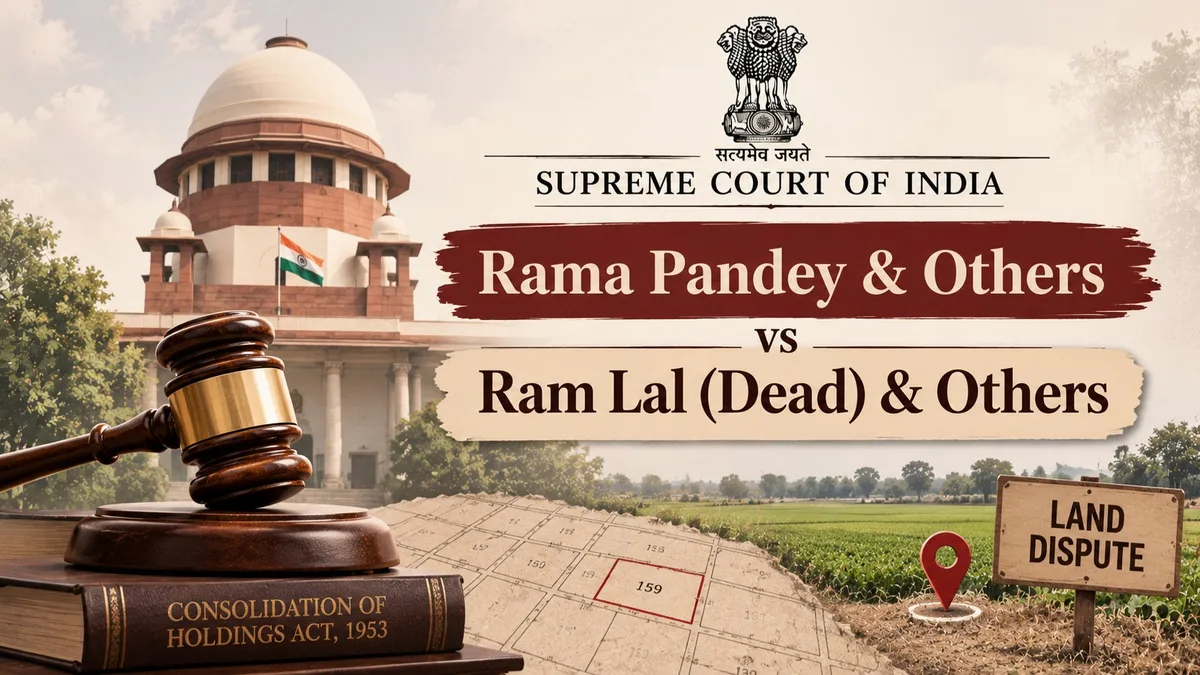
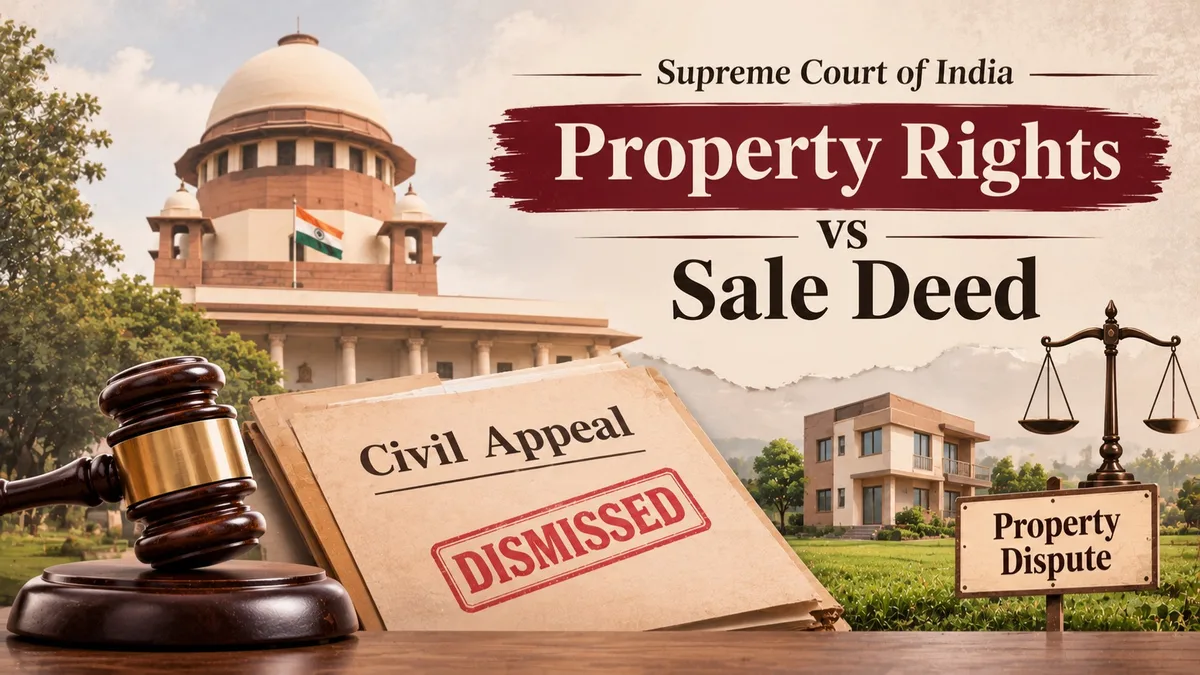
The Supreme Court dismissed the appeal filed by Rama Pandey and others and sustained the Allahabad High Court’s interference with a consolidation allotment concerning Plot No. 159 in District Basti. The Court found that the original tenure holders had been displaced from roadside land without a valid reason, while the appellants themselves had no right or preferential entitlement to the plot.
Key Highlights :
- The dispute concerned Plot No. 159 in Village Barahpur Pandey, Tehsil Harraiya, District Basti, Uttar Pradesh.
- Consolidation operations in the village commenced on 12 October 1973; a provisional scheme proposing allotments was published on 3 April 1978.
- The appellants admitted that they had no right in the subject land; the respondents claimed to be its original tenure holders.
- The Assistant Director of Consolidation set aside the allotment scheme on 13 January 1986 and remanded the matter for fresh allotment.
- The Supreme Court relied on the Consolidation Officer’s spot-inspection material indicating that the land abutted the highway and found no valid basis for allotting it to persons without a preferential right.
Background :
- The respondents had challenged the Deputy Director of Consolidation’s order dated 31 December 1992 before the Allahabad High Court through Civil Writ Petition No. 1895 of 1993.
- The consolidation process involved preparation of the statement of principles, invitation of objections and publication of a provisional consolidation scheme.
- The original tenure holders objected to being displaced from the roadside plot and being allotted other, less advantageous chaks.
What Has Changed :
- Issue: Whether the Deputy Director of Consolidation’s order setting aside the earlier allotment could stand, and whether the High Court was justified in interfering with it.
- Finding: The record did not establish that the valuation and physical location of the land had been properly considered. The appellants had no right in the plot, whereas the respondents were its original tenure holders.
- Finding: The spot-inspection report and the order dated 18 September 1992 indicated that the plot abutted the highway. The allotment to persons without a preferential right was unsupported by a valid reason.
- Outcome: The Supreme Court found no ground to interfere with the High Court’s judgment. The civil appeal was dismissed; no order as to costs.
References :
- Uttar Pradesh Consolidation of Holdings Act, 1953 – Section 4(2): commencement of consolidation operations in the village, as stated in the judgment.
- Uttar Pradesh Consolidation of Holdings Act, 1953 – Section 9: notice inviting objections, as referred to in the judgment.
- Spot Inspection Report and order dated 18 September 1992 of the Settlement Officer of Consolidation: relevant to the physical location of the plot.
Source & Attribution :
Primary source: Supreme Court of India judgment, 2026 INSC 1199, dated 05 November 2026, supplied as the source PDF. No external URL is stated in the supplied document.
Disclaimer: This summary is an editorial aid prepared from publicly available information. It is not legal, tax or investment advice. Refer to the original notification, circular, order or report before acting.
Full Judgement / Attachment
Full Judgement
Frequently asked questions about Supreme Court of India
- What is the role of the Supreme Court of India?
- The Supreme Court, established on 28 January 1950, is the highest court of appeal in India. Under Article 141 of the Constitution, the law it declares is binding on all courts in India. It also hears writ petitions for enforcement of fundamental rights under Article 32.
- How can I check Supreme Court case status or download a judgement?
- Case status, cause lists, daily orders and judgements are published on the official website, sci.gov.in. Reported judgements are also available free through the Digital SCR (Supreme Court Reports) on the same website.
- What is a Special Leave Petition (SLP) and what is the time limit?
- An SLP under Article 136 asks the Supreme Court for permission to appeal against a judgement or order of any court or tribunal in India. Against a High Court judgement it is ordinarily filed within 90 days. Leave is discretionary, and most SLPs are decided at the admission stage.
- Who can file a case in the Supreme Court?
- Only an Advocate-on-Record, a lawyer who has passed the Supreme Court's AOR examination, can file pleadings in the Supreme Court. A party may appear in person with the Court's permission, but most litigants engage an Advocate-on-Record along with arguing counsel.
- How can White Collar Professional help with a Supreme Court matter?
- Post your requirement on White Collar Professional to receive proposals from verified Advocates, Chartered Accountants and Company Secretaries, compare them, and pay securely through the platform. This page also tracks the latest Supreme Court judgements and legal updates as they are reported.