Bombay High Court Refuses to Injunct Kangana Ranaut Starrer ‘Queen Full Power’: Generic Film Title ‘Queen’ Has Not Acquired Secondary Meaning, and a ‘Spiritual Sequel’ Needs Express Representation
Court / Authority
Bombay High Court
Update / Judgement Date
13 Oct 2026
Date of Publication
18 Oct 2026
Case No.
IA 5177/2026
Source
WCP News Bulletin
Author
Dipanshi Bansal — WCP Legal Desk
Reading Time
17 min read
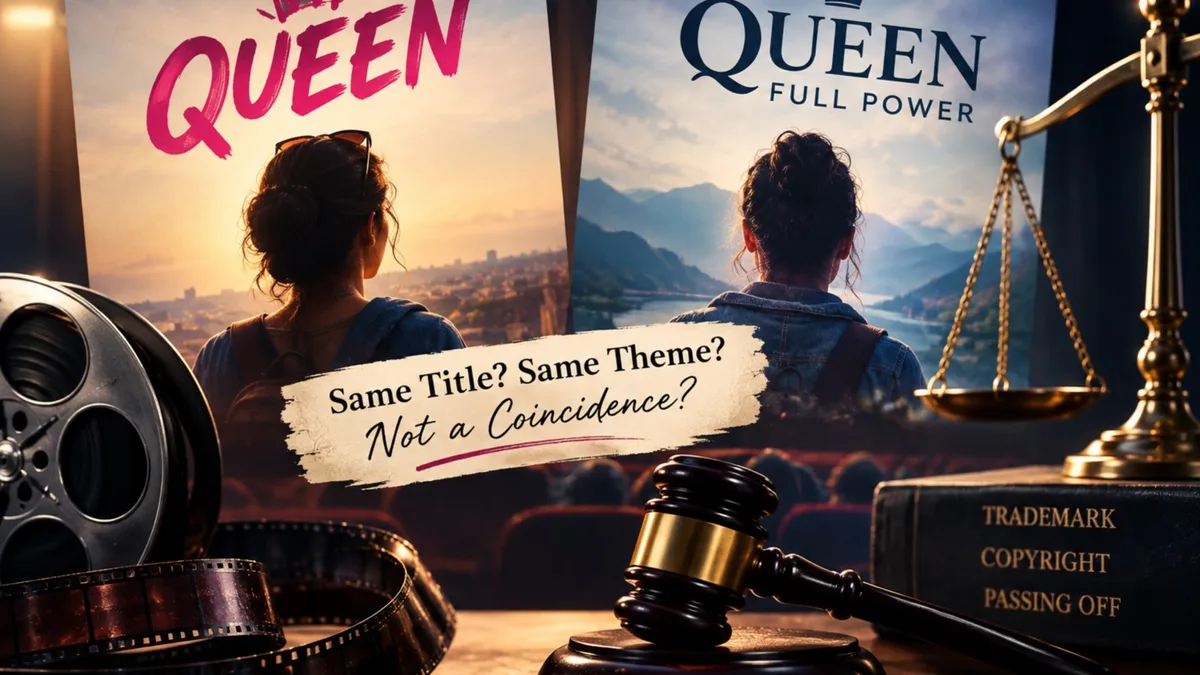
The plaintiff, 50% co-owner of the 2014 film ‘Queen’ under a novated Co-Production Agreement, sought to restrain Jiostar and Trigger Happy from making or releasing ‘Queen Full Power’ (same lead actress and director) as a sequel, derivative work or ‘spiritual sequel’, alleging passing off and contractual breach (Paras 1–4, 44–47). Comparing synopses, the Court found no derivative work, sequel or prequel (Paras 65–75). The generic, laudatory word ‘queen’ had not displaced its primary meaning in films, and the Delhi High Court’s sales-based factors in Kanungo Media were not accepted (Paras 88–116). A spiritual sequel needs express representation and callbacks (Paras 120–127), and same actor, director, theme or media and social-media speculation do not found passing off (Paras 128–164). The trinity test, irreparable injury and balance of convenience failed; the interim application was dismissed (Paras 172–180).
Key Proposition: A plaintiff alleging passing off in a film title made of a generic or laudatory word must prove that the word has lost its primary meaning and now points only to its film; box-office success, common lead actor or director, shared theme, and media or social-media speculation do not establish secondary meaning, confusion or a ‘spiritual sequel’ where the stories are different and the producers make no representation of a connection.
- Passing off – Film title ‘Queen’ – Secondary meaning – Generic and laudatory word – Held, plaintiff must show displacement of primary meaning in the minds of cinemagoers; success at the box office is not enough, and Kanungo Media’s sales-figure factor cannot stand after People Interactive and Pernod Ricard. (Paras 88–89, 103–116)
- Spiritual sequel – Held, not made out: it requires express representation by the makers and title, an explicit callback (such as a song) and a common central theme; different stories, a different theme and no representation by the producers defeat the claim. (Paras 120–127)
- Same lead actress and director, shared theme, media reports and social-media posts – Held, no monopoly in a theme; goodwill of a film’s cast and crew travels with them; third-party speculation and unverified social-media posts are unreliable and insufficient to prove confusion. (Paras 128–164)
- Co-Production Agreement – ‘veritable party’ (Cox and Kings) – Left open for trial; breach claim fails in any case as the film is not a derivative work, sequel or prequel; no irreparable injury, balance of convenience against the plaintiff. (Paras 166–178)
Background / Synopsis :
- Phantom Studios India Pvt. Ltd. (plaintiff) claims 50% ownership in the intellectual property rights of the 2014 film ‘Queen’ (lead actress Ms. Kangana Ranaut, director Mr. Vikas Bahl) under a Co-Production Agreement (CPA) dated 9 August 2012 with Viacom 18, novated by Deed of Novation dated 20 January 2022. The film was released on 7 March 2014 and earned about Rs.61.47 crores net in India and Rs.95.04 crores worldwide. (Paras 4, 168)
- In 2024–25 the director and lead actress spoke in interviews about ‘Queen 2’; the plaintiff sent letters and a caution notice dated 7 April 2026 to Jiostar India Pvt. Ltd. (Defendant No.1), Trigger Happy Entertainment Ltd. (Defendant No.2) and Mr. Bahl; Defendant No.1 replied that the film, then tentatively titled ‘Queen Forever’, was an original work with no connection to ‘Queen’. (Paras 5–8)
- The suit was filed on the belief that Jiostar was successor to Viacom 18; Jiostar and Trigger Happy’s replies showed the rights now vest in Digital 18 Media Pvt. Ltd. (Defendant No.3), which was impleaded; Jiostar was then described in the amended plaint as a ‘veritable party’ to the CPA. (Paras 10–11)
- The film now titled ‘Queen Full Power’ is co-produced by Defendant Nos.1 and 2, with Ms. Ranaut and Mr. Bahl; principal photography is complete. The plaintiff seeks a temporary injunction against making or releasing it as a sequel, prequel, remake, adaptation or derivative work, plus disclosure and other reliefs. (Paras 3, 44–45, 178)
- Judgment reserved on 21 September 2026 and pronounced on 14 October 2026. The plaint also claims damages of Rs.253.55 crores. (Paras 71, 177)
Issues For Consideration :
- Whether the plaintiff’s case of passing off in the film title was independently pleaded or merely anchored to the breach-of-contract case. (Paras 48–58)
- Whether ‘Queen Full Power’ is prima facie a derivative work, sequel, prequel or ‘spiritual sequel’ of ‘Queen’. (Paras 59–75, 117–127)
- Whether the title ‘Queen’ has acquired secondary meaning in relation to films, and whether there is likelihood of confusion, so as to sustain passing off. (Paras 76–116, 165, 172–176)
- Whether the same lead actress and director, a common theme, media reports and social-media posts can found passing off. (Paras 128–164)
- Whether Defendant No.1 is a ‘veritable party’ to the CPA and whether the contractual covenants are breached. (Paras 167–171)
- Whether irreparable injury and balance of convenience favour a temporary injunction. (Paras 177–178)
Submissions Of Parties :
Plaintiff (Mr. Darius Khambata, Senior Advocate):
- ‘Queen Full Power’ is deceptively similar to ‘Queen’: same lead actress and director, titles derived from terms for the female lead, a similar theme of a woman’s empowerment, and public statements by the actress and director that it is a sequel; media reports and social-media posts show public perception. (Paras 12, 15–16)
- Passing off lies in a film title: relied on Krishika Lulla, Francis Day & Hunter, Kanungo Media (secondary meaning and confusion; four factors), Sholay Media, Vishesh Films, K.M. Multani and Anil Kapoor Film Co.; ‘Queen’ has been used for 12 years by a single source. (Paras 13–14, 41)
- The film is also a ‘spiritual sequel’ (Good Newwz/Bad Newz, Cocktail/Cocktail 2, Love Aaj Kal, Taare Zameen Par/Sitare Zameen Par). (Para 15)
- Clause 1.1.2 of the CPA includes derivative rights in the Assigned Rights; Jiostar is bound as a non-signatory ‘veritable party’ (Cox and Kings; Utair Aviation; KKH Finvest) as it is part of one economic unit with Digital 18 and has performed exploitation, statement and payment functions. (Paras 17–19)
- In rejoinder: passing off was independently pleaded and the plaint must be read holistically (Ram Sarup Gupta); T.V. Venugopal protects descriptive words with secondary meaning; Tri-Star Pictures; Jagdish Gopal Kamat; Viacom 18 sought to register ‘Queen’; blogs and later material may be relied on. (Paras 40–43)
Defendant No.1 – Jiostar (Mr. Ravi Kadam, Senior Advocate):
- The suit is principally for breach of the CPA, styled a ‘Commercial Suit’, not a ‘Commercial IP Suit’; passing off is anchored to the derivative-work case, and no final injunction is sought for passing off by title. (Paras 20–21)
- The film is not a derivative work: it is a thriller-drama set in Mumbai with no romantic angle and a largely Marathi cast; themes are not protectable (R.G. Anand); the ‘spiritual sequel’ case is unpleaded and untenable. (Paras 22–24)
- ‘Queen’ is a common, laudatory English word; the secondary-meaning threshold is high (K.M. Multani, People Interactive, Anil Kapoor Film Co.); films with identical or common titles are made regularly; same actor or director is not actionable; third-party media material is unreliable and barred by Order XI CPC; no injury, as there has been no sequel in 12 years. (Paras 25–29)
Defendant No.2 – Trigger Happy (Mr. Ashish Kamat, Senior Advocate):
- No cause of action under the CPA, to which it is not a party; the claim of passing off fails at the first integer of actionable goodwill, as the plaintiff disclaims monopoly in the word, the theme and the actor-director combination; Pernod Ricard; Order XI (Ambalal Sarabhai); non-impleadment of Ms. Ranaut and Mr. Bahl is fatal; ‘spiritual sequel’ is alien to law and raised only in rejoinder. (Paras 30–35)
Defendant No.3 – Digital 18 (Dr. Birendra Saraf, Senior Advocate):
- Defendant No.3 has no involvement in the film; Defendant No.1 is neither a party to nor bound by the CPA and is not part of the same economic unit; mere administrative assistance does not meet the Cox and Kings test; ‘Sholay’ shows what secondary meaning looks like, ‘Queen’ does not; social-media material is unreliable (Texas Precious Metals, Nordstrom, Echo Drain, Indian Express). (Paras 36–39)
Court's Observations & Analysis :
Re: Issue 1 – Pleading of passing off independent of contract
- Paragraphs 8, 12, 50, 52 and 55 of the plaint plead acquisition of secondary meaning, goodwill and confusion in the title ‘Queen’; though the main thrust is contractual and passing off is anchored to it to some extent, the plaint must be read holistically and a court cannot compare quantum of pleadings; Order VI Rule 2 CPC requires only a concise statement of material facts. (Paras 49–52, 55, 58)
- Defendants understood and answered the passing-off case in their affidavits (Ram Sarup Gupta), and are estopped from taking the pleading objection; the objection is rejected. (Paras 53–54, 56–57)
Re: Issue 2 – Derivative work, sequel or prequel
- Copyright infringement is neither pleaded nor argued; the derivative-work claim is examined for the contractual case (CPA clauses 1.1.2, 1.1.7, 1.1.8, 1.1.34, 2.3). (Paras 59–60)
- The Court took the synopsis of ‘Queen Full Power’, tendered to the Court and the plaintiff’s counsel but not on affidavit to protect the film’s secrecy; it was properly considered, and if false the plaintiff can seek action and damages. (Paras 61, 64, 69–71)
- ‘Queen’ is the story of a young unmarried Punjabi woman honeymooning alone in Paris and Amsterdam; ‘Queen Full Power’ is a kidnapping comic thriller about a married middle-aged Marathi woman set in Mumbai, with no travel or romantic arc and a largely Marathi cast. The synopsis shows no commonality; it is not a sequel, prequel, spin-off, reboot or derivative work, and the use of ‘rani’ in the cast list is not significant as the lead character is named Pooja. (Paras 63–66, 73–75)
Re: Issue 3 – Secondary meaning in film title and likelihood of confusion
- No copyright subsists in a title (Krishika Lulla), but passing off or infringement of a registered mark in a film title can lie on the facts (Francis Day & Hunter; Kanungo Media); no straitjacket formula exists. (Paras 79–81)
- Secondary meaning means the primary meaning is lost and the word points to the claimant (People Interactive, paras 15–18 quoted). The Court agreed with People Interactive and Pernod Ricard that sales, expenses and duration of use alone do not prove it, so the four factors in para 23 of Kanungo Media cannot establish it in every case, and the sales-figure factor is no longer valid after Pernod Ricard. (Paras 82–89, 103)
- A box-office hit is not enough; the film must be a cult classic whose title is so engrossed in viewers’ minds that only the claimant’s film comes to mind. Using the same title for different films is an established trade practice (Golmaal, Khiladi, Deewar, Aankhen, Yaadein and others), so trademark tests do not squarely apply to film titles. Where the title is generic or laudatory the threshold is extremely high; for coined titles it is lighter. (Paras 89–90)
- ‘Queen’ is generic and laudatory, used in many films and on OTT platforms; the plaintiff claims no exclusivity in the word and made no sequel in 12 years; it did not object to Manikarnika: The Queen of Jhansi, Thalaivii or Revolver Rani, so it cannot sue selectively; the word has not lost its primary meaning even in relation to films. (Paras 91–92, 104, 107)
- Vishesh Films (Aashiqui) distinguished on three counts: registered trademark, an existing franchise, and prior negotiations between the parties. Sholay Media supports the defendants, as ‘sholay’ has truly displaced its primary meaning while ‘queen’ has not. Anil Kapoor Film Co. also helps the defendants (commonplace title, higher burden, information overload makes deception difficult). T.V. Venugopal, Tri-Star Pictures, Jagdish Gopal Kamat distinguished; Free Elective Network and Jyothi Labs not discussed as set aside or stayed; Dilip Dhanwani followed on the stricter test for descriptive titles. (Paras 93–102, 105–114)
- Likelihood of confusion under Kanungo Media is not met: apart from the word ‘queen’ and the actress-director pair, there are no common features. (Paras 113–116, 165)
Re: Issue 4 – Spiritual sequel, theme, actor-director and media/social-media material
- The ‘spiritual sequel’ case was not pleaded (the plaint pleads a sequel or derivative work), but the Court considered it. A spiritual sequel abandons narrative continuity yet mirrors the soul of the original; it requires substantial shared elements, an express representation by the makers and through the title, an explicit callback (such as a repeated hit song) and a common central theme; mere thematic similarity is not enough. (Paras 118–123)
- Defendants have never represented a link to ‘Queen’; no distinctive element of ‘Queen’ is repeated; themes differ (self-discovery of a young woman versus a mother’s rediscovery of power); the examples relied on involve different actors, so the plaintiff’s reliance on the same actress is self-defeating. (Paras 124–127)
- There is no proprietorship in a theme or idea (R.G. Anand, para 46); the plaintiff cannot monopolise the theme of a woman’s discovery of power, and even the combination of title, theme and lead actor creates no monopoly where the stories are unconnected. (Paras 128–133)
- Goodwill from a film attaches also to its actors and director and travels with them (as monikers do); the plaintiff claims no exclusivity in engaging Ms. Ranaut or Mr. Bahl, and their engagement, singly or together, is not passing off. (Paras 134–139)
- The 2024–25 interviews pre-dated the film and the actress’s engagement and do not bind the producers; neither was impleaded despite heavy reliance on their statements. Media reports are speculation, hearsay (Laxman Raj Shetty; Star (India) Ltd., Bombay DB) for which producers are not responsible. (Paras 141–150)
- Social-media posts are unreliable, from anonymous handles (one even advertising a non-existent ‘Queen 2’ poster), and not enough to prove actual confusion (Texas Precious Metals, Nordstrom, Echo Drain, Indian Express); US District Court views may be noted for sound reasoning; some posts themselves show viewers distinguish the films; the Order XI objection to post-suit documents is left open. (Paras 151–164)
- Making ‘Queen Full Power’ does not stop the plaintiff from making a sequel, prequel, derivative work or spiritual sequel, even with Ms. Ranaut and a title such as ‘Queen 2’. (Para 166)
Re: Issue 5 – Breach of CPA / veritable party
- The contractual case took a back seat once it emerged that Jiostar is not Viacom 18’s successor; the Court did not decide whether Jiostar is a ‘veritable party’ (Cox and Kings), leaving it for trial, because even if it is, the breach case fails as the film is not a derivative work, sequel or prequel. (Paras 167–171)
Re: Issue 6 – Trinity test, irreparable injury and balance of convenience
- Passing off needs (i) actionable goodwill, (ii) misrepresentation and (iii) injury; the plaintiff fails at goodwill because it disclaims monopoly in the word, the theme and the actor-director pair yet combines these integers, and also fails on actionable similarity and injury (viewership on OTT not shown to suffer). (Paras 172–176)
- No irreparable injury: the case is speculative, and damages (prayed at Rs.253.55 crores) are available if the film is later found similar or promoted as a sequel. Balance of convenience: no sequel attempted in 12 years, whereas principal photography is complete and restraint would cause the defendants immense loss. (Paras 177–178)
Notable Observations:
- “there is conceptual difference between a successful film at the box office and the film needs to be a cult classic, the one which has developed loyal and passionate fan base over the time and has left a legacy.” (Para 89)
- “Even combination of the three viz. title, theme and lead actor would not create any monopoly in favour of the Plaintiff once it is established that there is absolutely no connect in the story of the two films.” (Para 133)
Decision & Directions :
- Plaintiff has failed to make out a case for a temporary injunction; the Interim Application is dismissed. (Paras 179–180)
- The observations are prima facie and shall not affect the trial of the suit. (Para 181)
- Costs of the Interim Application shall be costs in the suit. (Para 181)
- Open points left for later: whether Jiostar is a ‘veritable party’ to the CPA (Para 171); the Order XI objection to the plaintiff relying on pre-suit documents not filed with the plaint, for which the plaintiff must apply (Para 151). Separate Opinions: None.
Legal Provisions Discussed & Precedents Cited :
- Common law tort of passing off – classical trinity: goodwill, misrepresentation, damage (Paras 172–176).
- Copyright Act, 1957 – No copyright in a title (Krishika Lulla); no copyright in theme, idea or plot (R.G. Anand); derivative works under the CPA, not under the Act, as no copyright infringement was pleaded.
- Trade Marks Act, 1999 – Film title functioning as a trademark where registered or recognised (Vishesh Films discussed; plaintiff holds no registration in ‘Queen’).
- Code of Civil Procedure, 1908 – Order VI Rule 2 (concise statement of material facts); Order XI (late documents), left open; temporary injunction (prima facie case, irreparable injury, balance of convenience). Section/Order numbers for injunction are not cited in the judgment.
- Co-Production Agreement dated 9 August 2012, as novated on 20 January 2022 – Clauses 1.1.2 (Assigned Rights), 1.1.7 (Derivative Works), 1.1.8 (Derivative Rights), 1.1.34 (Work), 2.3 (joint equal ownership), 5.1/5.3, 7 and 13.3.
- Doctrines: secondary meaning (displacement of primary meaning); no proprietorship in a theme; ‘veritable party’ non-signatory doctrine (Cox and Kings); hearsay and newspaper reports; film goodwill travels with its cast and crew; pleadings read holistically.
- Kanungo Media (P) Ltd. v. RGV Film Factory, 2007 SCC OnLine Del 314 – Doubted in part (sales-figure factor not accepted; secondary meaning and confusion tests otherwise considered).
- People Interactive (India) Pvt. Ltd. v. Vivek Pahwa, 2016 SCC OnLine Bom 7351 – Followed. Pernod Ricard India Pvt. Ltd. v. Karanveer Singh Chhabra, 2025 SCC OnLine SC 1701 – Followed. R.G. Anand v. Deluxe Films, (1978) 4 SCC 118 – Followed.
- Krishika Lulla v. Shyam Vithalrao Devkatta, (2016) 2 SCC 521 – Followed. Francis Day & Hunter Ltd. v. Twentieth Century Fox Corporation Ltd., 1939 SCC OnLine PC 50 – Relied on. Anil Kapoor Film Co. Pvt. Ltd. v. Make My Day Entertainment, 2017 SCC OnLine Bom 8119 – Relied on.
- Vishesh Films (P) Ltd. v. Super Cassettes Industries Ltd., 2024 SCC OnLine Del 6117 – Distinguished. Sholay Media Entertainment v. Yogesh Patel, 2022 SCC OnLine Del 1994 – Referred to (held to support the defendants). T.V. Venugopal v. Ushodaya Enterprises Ltd., (2011) 4 SCC 85 – Distinguished.
- Cox and Kings Ltd. v. SAP India Pvt. Ltd., (2024) 4 SCC 1 – Referred to (not decided). Ram Sarup Gupta v. Bishun Narain Inter College, (1987) 2 SCC 555 – Followed. Laxman Raj Shetty v. State of Tamil Nadu, (1988) 3 SCC 319, and Star (India) Ltd. v. Zee Entertainment Enterprises Ltd., MANU/MH/2327/2011 – Relied on (newspaper reports are hearsay).
- Dilip Dhanwani v. Luv Ranjan Films Pvt. Ltd. (Bombay HC, interim order) – Relied on. Tri-Star Pictures Inc. v. Unger, 14 F. Supp. 2d 339, Jagdish Gopal Kamat v. Lime & Chilli Hospitality Services, 2015 SCC OnLine Bom 531 – Distinguished. Texas Precious Metals v. Valaurum, Nordstrom v. NoMoreRack and Echo Drain v. Newsted, 307 F. Supp. 2d 1116 (US District Courts) – Referred to.
Full Judgement / Attachment
Full Judgement
Frequently asked questions about Bombay High Court
- Where does the Bombay High Court sit and which areas does it cover?
- The Bombay High Court has its principal seat in Mumbai, with benches at Nagpur, Chhatrapati Sambhajinagar (Aurangabad) and Goa, and a circuit bench at Kolhapur that began sitting on 18 August 2025. It has jurisdiction over Maharashtra, Goa and the Union Territory of Dadra and Nagar Haveli and Daman and Diu. Established in 1862, it is one of India's three oldest High Courts.
- How do I search Bombay High Court cases across Mumbai, Nagpur, Aurangabad, Goa and Kolhapur?
- The official website, bombayhighcourt.gov.in, lets you pick the bench (Principal Seat, Nagpur, Aurangabad, Goa or Kolhapur) before searching case status, cause lists and orders. Judgements are also on the eCourts Judgments portal (judgments.ecourts.gov.in).
- What is the Original Side and Commercial Division of the Bombay High Court?
- On its Original Side, the court hears high-value civil suits arising within Mumbai city, and its Commercial Division hears commercial disputes under the Commercial Courts Act, 2015. It also hears arbitration petitions, company and tax appeals, including those from the ITAT Mumbai, Pune, Nagpur and Panaji Benches.
- What is a Letters Patent Appeal in the Bombay High Court?
- In many matters, an order of a single judge can be challenged before a Division Bench by a Letters Patent Appeal under Clause 15 of the Letters Patent. Commercial matters follow the Commercial Courts Act route instead. Against a final judgement, the route is a Special Leave Petition under Article 136, ordinarily within 90 days.
- How can White Collar Professional help with a Bombay High Court matter?
- Post your requirement on White Collar Professional to receive proposals from verified Advocates, Chartered Accountants and Company Secretaries, compare them, and pay securely through the platform. This page also tracks the latest Bombay High Court judgements and legal updates as they are reported.